Sample No. 0261
Whitney Square: A Full-Size Thrifted Quilt with Hand Quilting and Autumn Charm
A $28 quilt found in Whitney, Texas, brings hand quilting, a soft muslin backing and a colorful mix of fabrics into a cozy home.

Some quilts feel special before you know anything about who made them. “Whitney Square,” a full-size quilt Melisa found in an antique shop in Whitney, Texas, has that kind of warmth: a lively mix of fabrics, hand quilting and the appealing signs of a well-loved handmade piece. It cost $28, and Melisa brought it home as both a cozy quilt and a reminder of a town she adores.
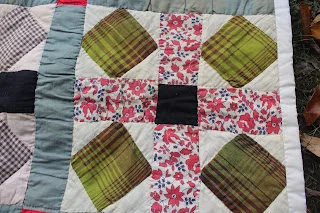
There’s a useful distinction here between what the quilt can show and what its owner can only imagine. The stitching, backing and fabric choices are visible evidence of the work; the maker’s identity and the circumstances of its creation remain unknown. That gap doesn’t diminish the quilt. It gives Melisa room to connect its materials with a story of her own.

A small-town find and a fall visit
Melisa and Mr. Pinker visited Whitney in September. She’d grown fond of the small Texas community a couple of years earlier and hoped the trip would include a night at its campground. That plan didn’t work out, but a visit to the antique shops on the square brought an unexpected treat: a quilt she couldn’t leave behind.
The setting matters to the story because the quilt wasn’t a planned purchase tied to a shopping list. It turned up during a visit to a place Melisa already cared about, so the object carries both the pleasure of finding something appealing and the memory of returning to Whitney. That’s a familiar part of antique shopping: an item’s appeal can come from its look, its usefulness and the circumstances in which it catches your attention.

The purchase came during the first signs of autumn at home. On the hill behind the well house, leaves were starting to turn red, gold and orange. Rain had sent some down to the ground, where they were gathering into a colorful carpet. Once the trees are bare, Mr. Pinker plans to mow and mulch the leaves; until then, the changing colors make a fitting backdrop for a quilt that’s already full of warm, varied fabrics.
That seasonal echo is subtle, but it helps explain why the quilt feels at home in the account. Its fabric mix isn’t described as a formal autumn palette; rather, Melisa’s surroundings and the prints she notices create that association. The quilt and the landscape around the house become part of the same domestic scene.

Details that give the quilt its character
The quilt is machine pieced and hand quilted, with most of the quilting worked in the ditch. Its backing is soft muslin, and the back fabric turns to the front to form a folded binding. Small stitches tack the binding down along its edge. These details offer a glimpse of the work in the finish, even though the maker is unknown.
Those construction choices tell a modest but clear story. Machine piecing joined the fabric sections, while the hand quilting added another layer of labor after the top was assembled. Quilting in the ditch follows the seams between pieces, so the stitching can support the layers without competing with the prints. The folded backing binding also makes economical use of the fabric already on hand, though the source doesn’t establish why the maker chose that finish.
 |
| The quilt is full size. |
Its imperfections are part of its charm. Melisa describes it as warm and snuggly, and imagines that it was made with a great deal of care. She pictures a grandmother sewing with fabric saved from old family shirts and dresses, and hand quilting in the evening beside a crackling fire. She’s clear that this is a fond imagining, rather than something known about the quilt’s maker. Still, the idea points to the personal appeal of a piece built from many different prints: even without a documented history, it invites questions about how its materials came together.
For makers, the contrast between machine piecing and hand quilting may also be the detail that gives the quilt its particular character. The construction combines two kinds of work, each leaving a different trace. A close look at seams, quilting lines and binding can reveal decisions that a quick glance misses (and this is the part most people overlook). Small signs of wear add to that sense of use, though the account doesn’t describe the quilt’s age or explain where the marks came from.

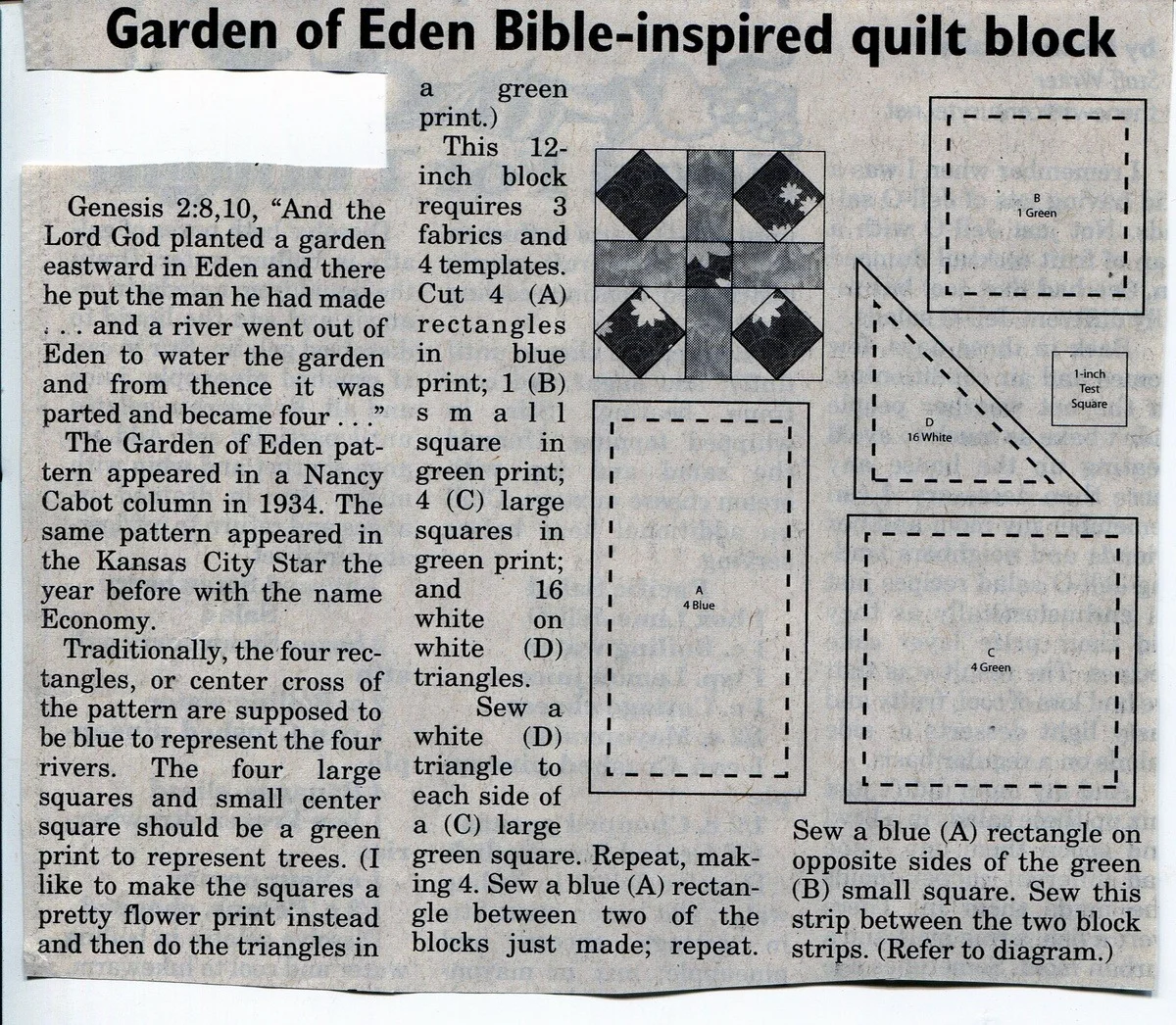
Red fabrics are among Melisa’s favorites, though the quilt has plenty more to catch the eye. She believes its block is called “The Garden of Eden,” citing Nancy Cabot in the 1930s. A newspaper clipping found on Pinterest accompanies the post’s discussion of the block, but that reference doesn’t establish who made this quilt or when. Another standout is a yellow-green plaid that brings to mind the bright leaves of a hickory tree near Melisa’s home.
That mix of recognizable pattern and personal association makes the design interesting to study. A block name can connect a quilt to a wider vocabulary of patterns, while color and fabric choices give a particular example its own voice. Here, the red prints draw Melisa in, and the yellow-green plaid links the quilt to a tree she sees at home. The pattern may be shared; the way its fabrics are assembled is specific to this piece.




A keepsake for home
At $28, the quilt became a thrifty souvenir of Melisa’s September visit. She imagines it on her grandfather’s old iron bed and plans to share a photo when she changes the bedding. For the Christmas season, she’s hung it on a wooden quilt shelf, while the rest of the seasonal decorating is still underway.
The quilt’s role shifts with its setting. On a bed, it can be used as a full-size covering; on a shelf, it becomes part of the room’s display. Melisa’s plans connect those uses to family and seasonal routines, giving this found object a place in daily life rather than leaving it as a purchase to admire from a distance.


Melisa was already getting into the holiday mood, with The Grinch and The Christmas Carol on her viewing list and hot cocoa close at hand. This quilt fits naturally into that cozy setting: a full-size find with soft backing, careful hand quilting and a fabric mix that rewards a closer look. Its name may simply come from the town square where it was found, but the memories attached to it are what make Whitney Square feel like a keeper.
What a found quilt carries forward
This is more significant than it looks: the quilt preserves evidence of practical choices while acquiring a new story in Melisa’s home. Its unknown maker can’t be credited with a specific intention, and the imagined family history should stay clearly in the realm of possibility. Still, the visible construction and the owner’s response are enough to make the piece worth noticing.
If you’re working in this space, Whitney Square is a reminder that describing a handmade object carefully can be more revealing than filling gaps in its history. You can point to the construction, name the features that catch the eye and distinguish those observations from guesses. That restraint leaves the quilt’s appeal intact. A useful object, a memory of a town, and a story still unfolding.