Sample No. 0276
Thrifted Treasures, Kitty Korn Quilt Blocks and a Pumpkin Ice Cream Pie
A vintage inspired thrift haul, progress on the Kitty Korn and Roundabout quilts, plus an easy pumpkin ice cream pie for eight.

A thrifting trip brought home vintage finds, cozy textiles and useful kitchen pieces, while quilting projects wait for their next stretch of stitching time. The haul ranges from a vase with a possible pottery history to a low priced punch bowl ready for family food. There’s also a Thanksgiving dessert to consider: a pumpkin ice cream pie that serves eight and goes straight into the freezer. The common thread is practical pleasure: objects and projects that can be enjoyed in their own time, without needing to be finished all at once.
A handful of thrift store finds
On a recent visit to the thrift store with Mr. Pinker, several items came home that weren’t on the shopping list. The standout was a mauve pink vase that might be Niloak pottery. Niloak was made in Benton, Arkansas, from 1909 to 1946, though the vase’s identity is still a guess. That uncertainty is part of the appeal, but it’s also a useful reminder that a resemblance can suggest a maker without confirming one. For a collector, the shape and color can be enough to make a piece worth bringing home, even before its history is settled.

A box of little forks caught the eye first because of its packaging. Opening it revealed the forks themselves, which will join a display of vintage tins. Their age is uncertain: could they be from the 1960s? The packaging drew attention, but the small utensils have a second life as display objects, where their scale and style can sit alongside the tins. When thrifted items are inexpensive or unusual, a collection can grow by association as much as by a strict theme.

Another find is a homemade wooden piece that might be a spool rack. Its original purpose isn’t clear, but it inspired thoughts about possible uses and made its way into the cart. That’s a familiar kind of thrift store decision: the object has enough structure to suggest a job, though not enough evidence to name it with confidence. If you sew or quilt, a rack for spools sounds plausible; if not, the piece may still work as a small display or organizer. The possibilities are part of what made it appealing.

From the linen section came a soft crocheted blanket, picked out to drape across the back of the couch for chilly evenings. A handmade textile can bring warmth and texture into a room while continuing to serve a straightforward purpose. Two small pieces of brown pottery also came home, along with a pair of vintage Christmas mice. There’s already plenty of brown pottery at home, but these pieces earned a place in the collection. That’s a collector’s judgment call: the new pieces need to feel at home with what’s already there, even when they repeat a familiar material or color.


A punch bowl, marked down to $1.29, should be handy for a double batch of Cranberry Marshmallow Salad, a family favorite. Engraved stainless steel measuring cups were another practical find. The bowl has a clear job waiting for it, which can be a better reason to buy than rarity or display value. That said, kitchen pieces still need a careful cleaning before they’re put to use, especially when their previous history is unknown. Before putting everything away, the new pieces are due for that good cleaning.


Quilting plans on pause
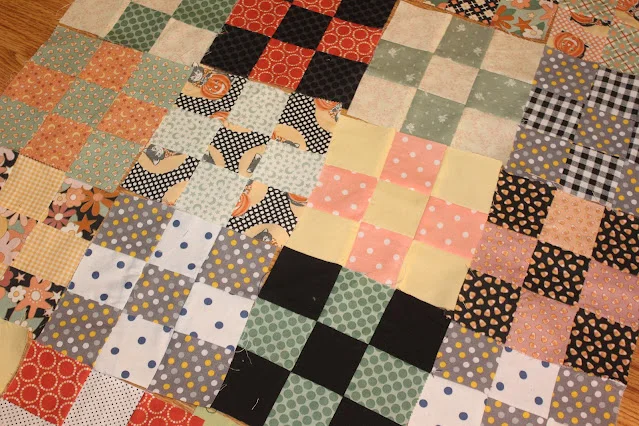
Before feeling under the weather, work was moving along on the Kitty Korn Quilt. Ten more blocks have been pieced, combining soft colors with black. The fabrics include Urban Chiks prints alongside pieces from the stash, so the blocks bring together coordinated prints and materials already on hand. The nine-patch blocks are now waiting in a corner until quilting energy returns. A pause can be part of a project’s rhythm; the pieces are made, and the next decisions can wait until there’s time and energy to see them clearly.


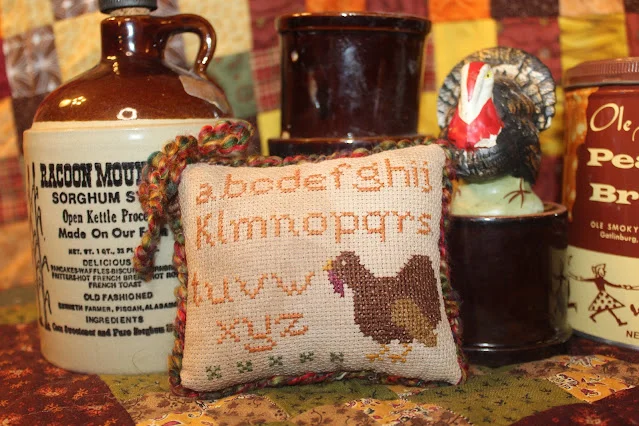
The next task for the Roundabout quilt is embroidering the Grand Gobbler. Its little doodles are hand drawn, with the imperfect lines left in. Two more blocks will complete the set of 12; after that, the block arrangement still needs to be decided. Leaving the drawn marks visible gives the design a personal quality that a perfectly uniform repeat might not have. The fall designs and earlier patterns can be viewed or printed through the Roundabout design post. For anyone following along, the order is clear: finish the embroidery, complete the remaining blocks, then work out the layout.


Pumpkin ice cream pie
This freezer dessert makes eight servings. Its filling blends vanilla ice cream with canned pumpkin, brown sugar and warm spices, then sets in a graham cracker crust. Whipped cream goes on as garnish. The method keeps the preparation simple, and the freezer does the work of firming the filling once it’s in the crust. It’s a seasonal dessert with a different texture from a baked pumpkin pie: cool, creamy and easy to portion after chilling.

Ingredients
- 1/2 gallon vanilla ice cream
- 1 cup of canned pumpkin
- 1/2 cup of brown sugar, packed
- 1 Tablespoon of orange juice
- 1/2 teaspoon of ginger
- 1/4 teaspoon of cinnamon
- 1/4 teaspoon of nutmeg
- 9-inch graham cracker crust
- Whipped cream, for garnish
Directions
- Put the ice cream in a large bowl. Cut it into pieces and let it soften.
- With an electric mixer, combine the pumpkin, brown sugar, orange juice, ginger, cinnamon and nutmeg.
- Add the pumpkin mixture to the softened ice cream and mix well.
- Spoon the filling into the graham cracker crust. Freeze until firm, then garnish with whipped cream.
The timing depends on the ice cream softening enough to mix without turning fully liquid. Once combined, the filling should be spread into the crust and frozen until firm; the instructions don’t give a set freezing time, so firmness is the useful cue. The recipe also keeps the flavorings measured and restrained, letting the pumpkin and vanilla carry the main flavor, with orange juice and spices rounding it out. A practical make-ahead option for a holiday table.

What waits for the next stretch of time
This is more significant than it looks: the day’s finds and projects all depend on ordinary, usable time. The blanket can be put to work right away, while the pottery and kitchen pieces need cleaning; the quilts need energy and a few more decisions. None of those stages has to happen at once. A craft practice often moves between making, collecting, sorting and resting, and each stage keeps the work connected to everyday life.
If you’re working on a quilt or another long project, a pause doesn’t erase the progress already made. The ten new blocks are ready, the Roundabout set is close to complete, and the next tasks are specific enough to return to when the moment is right. Meanwhile, the thrifted pieces can settle into their places, and the pie can chill in the freezer. Small steps.