Sample No. 0257
Five Papercraft Trends to Watch in 2027: Texture, Botanicals and Bold Colour
Explore five ideas shaping papercraft in 2027, from tactile layers and vintage florals to bright geometry, reused materials and dimensional makes.
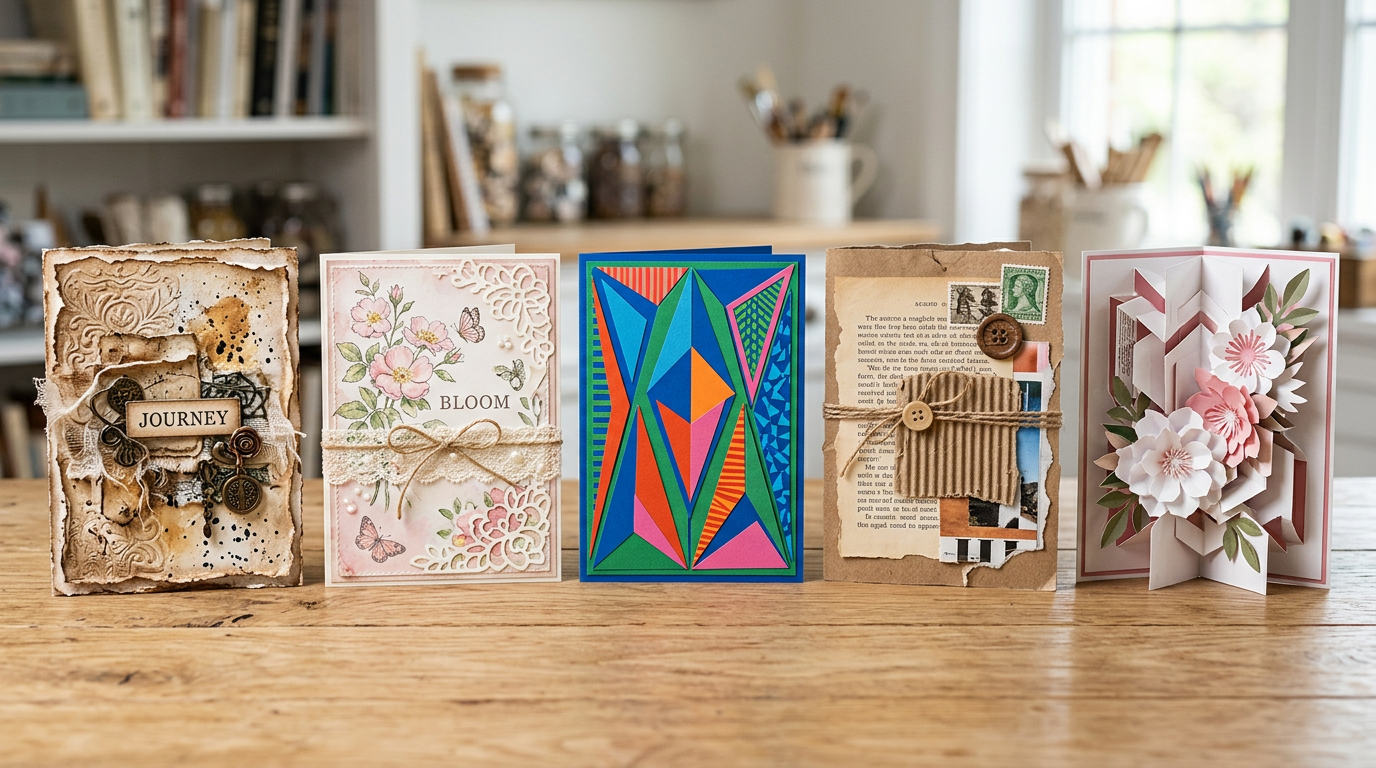
Papercraft forecasts for 2027 point toward a lively mix: tactile surfaces, nostalgic botanicals, assertive colour, repurposed materials and paper projects with dimension and movement. Those directions may sound like they belong to different craft rooms. In practice, they offer plenty of room to combine familiar supplies and techniques in fresh ways.
The forecasts considered here draw on design research from Creativeworld, WGSN, Coloro and Patternbank, alongside reports on creative hobbies. Some themes already have momentum; others are possibilities to watch as new products and ideas appear. They’re prompts for experimenting, not a checklist for replacing your stash. You can try one small change and keep making in the style you enjoy.
1. Make texture part of the design
Clean cuts, carefully aligned layers and coordinated papers remain appealing, but the forecasts suggest more interest in surfaces that show the maker’s hand. Think torn edges, handmade paper, embossed cardstock, visible stitching, inked distressing and layered collage. Small irregularities can give a card or journal page character that a perfectly uniform surface doesn’t have.
Creativeworld’s 2027 forecast emphasizes tactile materials, handmade finishes and individual expression. One of its themes also looks at the way paper and other materials respond to light. That opens up possibilities for mixed media: combine matte and glossy finishes, layer translucent vellum over textured paper, or set an embossed panel against a smooth background. The contrast can help the surface become a feature in its own right.
Try building a small composition with two or three kinds of texture. For example, pair torn handmade paper with a dry embossed layer, then add blended ink and a few stitched details. Let the materials carry some of the design; a stamped image or sentiment can remain simple. If you enjoy collage, vary the paper edges and layer thin pieces so the eye has details to explore.
Texture doesn’t need a shopping trip. Leftover cardstock, vellum, inks and embossing folders may already offer enough variety to test the idea. The useful question is not how many effects can fit on a project, but which surface deserves attention. A few distinct layers are easier to read than a stack of competing finishes.
2. Give botanical designs a new mood
Flowers, butterflies and decorative papers remain strong sources of inspiration, with the forecasts suggesting a softer, more nostalgic look for 2027. Instead of relying only on bright, contemporary florals, makers may see more delicate botanical drawings, watercolour-like illustrations, traditional motifs and vintage typography. Patternbank’s Spring/Summer 2027 research names directions including Dreamy Floral and Art Garden. Creativeworld’s Bedroom Stories theme explores nostalgic flowers, keepsakes and traditional decorative techniques.
For cardmaking, those references can become antique-style floral stamping, botanical die cuts, muted colours, translucent overlays or lace-like details. In scrapbooking and journalling, botanical imagery sits naturally alongside personal photographs, notes and small mementos. A vintage illustration can bring a page together without making it feel like a reproduction of an old design.
Try balancing a detailed flower with a cleaner layout or modern lettering. A restrained background gives an intricate image room to breathe; a single unexpected colour can bring the whole composition into the present. You might also pair a traditional motif with a geometric border or a contemporary shape. The appeal lies in the combination: familiar imagery gains a new character when the surrounding design changes.
This direction also suits makers with patterned papers already tucked away. A small panel or die-cut accent can introduce a floral print without requiring it to cover the whole card. For a journal spread, repeat one botanical motif in different sizes or use a translucent layer to soften a busier page. A careful edit often makes a nostalgic design feel more personal.
3. Try stronger colour and geometric pattern
Another forecast direction moves away from muted palettes toward expressive colour and pronounced pattern. WGSN and Coloro have named Luminous Blue their Colour of the Year for 2027. Their Spring/Summer palette also includes Energy Orange, Pop Pink, Meadowland Green and Clay. Patternbank points to geometric repeats, stripes, checks, mosaic-inspired designs and abstract patterns.
These ideas suit papercraft because so many techniques already rely on shape, repetition and arrangement. Circles, triangles and rectangles can form a striking background or a paper-pieced card. Repeated strips can become a graphic border; a simple stencil can create a bold field of colour. A cutting machine, guillotine or scissors can all help make the shapes, depending on the project and the tools you have.
Rather than matching every shade from one coordinated collection, test an unexpected pairing. A vivid blue beside a warm orange makes a different impression from a gentle, tonal combination. If the result feels too intense, reduce the area of one colour, add white space or repeat a neutral between the brighter shapes. Bold colour doesn’t require every part of a project to compete for attention.
Geometry can also bring order to a lively palette. Repeat one shape, alternate two colours, or use a grid to give an abstract design a clear structure. For a patchwork-style card, keep the pieces simple and let their arrangement create the pattern. This approach makes it easier to experiment with colour while keeping the design legible.
4. Reuse materials and revisit traditional techniques
Creativeworld’s forecasts also highlight repurposed materials, folk-inspired patterns, traditional decorative techniques and individual craftsmanship. That direction connects well with papercraft, where scraps and household paper can become useful ingredients for collage, journals and decorations. Old book pages, packaging, newspapers, fabric offcuts and leftover wallpaper can all offer colour, text or texture.
There’s no need to treat every saved scrap as a future project, but choosing materials with a clear purpose can make a satisfying starting point. Use a piece of packaging as the base for a decorated panel, cut book pages into collage shapes, or weave narrow paper strips into a small embellishment. Recycled cardstock can become packaging for a handmade gift. Printing, stencilling and paper weaving can lend familiar materials a different surface and rhythm.
Traditional and contemporary methods can work together. A digital cutting machine can shape a folk-inspired decoration; modern inks and stencils can transform an otherwise plain package. The material’s previous life may remain visible, adding a detail that a new sheet of paper wouldn’t provide. If you’re using reused paper, check that it’s suitable for the folds, adhesive and finish you have in mind.
Scraps are useful when they serve a project. Sort a handful by colour, texture or size, then choose a format that lets you use them: a collage panel, a journal page or a series of small embellishments. This gives offcuts a practical role while keeping the design intentional. A box of saved pieces becomes more rewarding when you can see what they’ll help you make.
5. Build cards and keepsakes with dimension
The fifth direction is more speculative: paper projects may move further into three-dimensional and interactive forms. Interest in handmade decorations, sculptural shapes and personalized keepsakes sits alongside a wider appetite for gifts made with individual meaning. That doesn’t guarantee a sudden flood of new mechanisms, but it does make dimensional paper worth watching.
Possibilities range from pop-up cards and folded constructions to layered shadow boxes, paper flowers, honeycomb decorations and interactive elements. These projects treat paper as a material to fold, curl, slot, interlock and shape, rather than only as a surface for printed or stamped decoration. Even a shallow layered scene can create depth; a folded element can turn a familiar greeting into a small surprise.
Paper engineering has a long history, from pop-up books to folded decorations and handmade flowers. The fresh opportunity is to revisit those techniques with current materials and tools. Cutting technology can help prepare repeated shapes, while hand folding and assembly give a project its structure. A simple mechanism may be enough to make a card feel more engaging; complexity isn’t the only route to impact.
Think about what the recipient will see and how the piece will open, stand or move. A layered shadow box offers depth at a glance; a pop-up construction reveals its structure as the card opens. Choose the format to suit the message and the maker’s interest. If you’re new to a particular fold or mechanism, a small sample lets you check the movement before building it into a finished piece.
Combine the ideas on your own terms
The most encouraging thread across these forecasts is the value placed on personal expression. A project might show that through imperfect handmade surfaces, a favourite vintage flower, vivid geometric shapes, reused paper or an unexpected fold. Those choices can also sit together. A textured background can support a bold geometric motif; a botanical illustration can become the focal point of a dimensional card; stencilling can turn packaging into a contemporary decoration.
Following a trend doesn’t mean changing your whole style or buying a new collection for every project. It can mean trying one different colour, adding a tactile layer or using a familiar technique on a new material. If you love traditional floral cards, keep making them. If clean layouts are your preference, a small embossed accent might be all the experimentation you need. Let the idea serve the project.
What to watch as 2027 approaches
These predictions are based on design research and industry forecasts available in October 2026. Textured surfaces and nostalgic botanical patterns already have visible momentum in those forecasts. The possibility of more dimensional and interactive papercraft is less certain, but worth watching as new projects and materials emerge.
Creativeworld is scheduled to take place in Frankfurt from 29 January to 1 February 2027. The event should give makers a clearer view of products, techniques and creative ideas being presented for the year. Even then, no forecast can account for every direction that makers will take. A fresh technique may catch on, an old favourite may return, or an unexpected material may spark a new approach.
For now, the useful takeaway is simple: explore the ideas that fit your craft room. Try texture if you want more tactile detail, botanical imagery if you enjoy nostalgic designs, or geometric shapes if you’re ready for stronger colour. Reuse materials when they suit the project, and experiment with dimension when you want a card or keepsake to hold a surprise. A trend is most interesting when it gives you a reason to make something your own.
Sources and further reading
- Creativeworld Trends 2027 – Home Sweet Home – Tactile materials, traditional techniques, repurposed materials and individual expression.
- WGSN and Coloro – Colour Forecast for 2027 – Luminous Blue and the Spring/Summer 2027 palette.
- Patternbank – Première Vision Spring/Summer 2027 Print Trends – Botanical illustrations, expressive florals, geometric repeats and contemporary patterns.
- Michaels 2026 Creativity Trend Report – Personal creativity, memory keeping and handmade projects.
- Pinterest 2026 Hobbies Trend Report – Emerging interest in hands-on creative activities and hobbies.
Image:  ko-fi.com