Sample No. 0240
Three Magazine Junk Journal Spreads for a Relaxed Creative Session
Turn one magazine into three playful journal spreads: animal portraits, an odd little collection, and stacks of color.

One magazine can supply the makings for three distinct junk journal spreads, with no need to plan a theme before you begin. This session moves from playful image making to collecting repeated shapes, then finishes with color. It’s a useful approach when you want to work with what’s already in front of you and let the pages suggest the next step.

Gather a journal, scissors, and a glue stick. A few pieces of parchment are optional; use them between pages if you’re concerned about fresh glue making the pages stick together. For this session, the maker heads to CVS, about a half mile away and a few blocks along the way. The short walk is part of the outing, but the project also works with a magazine you already have at home.
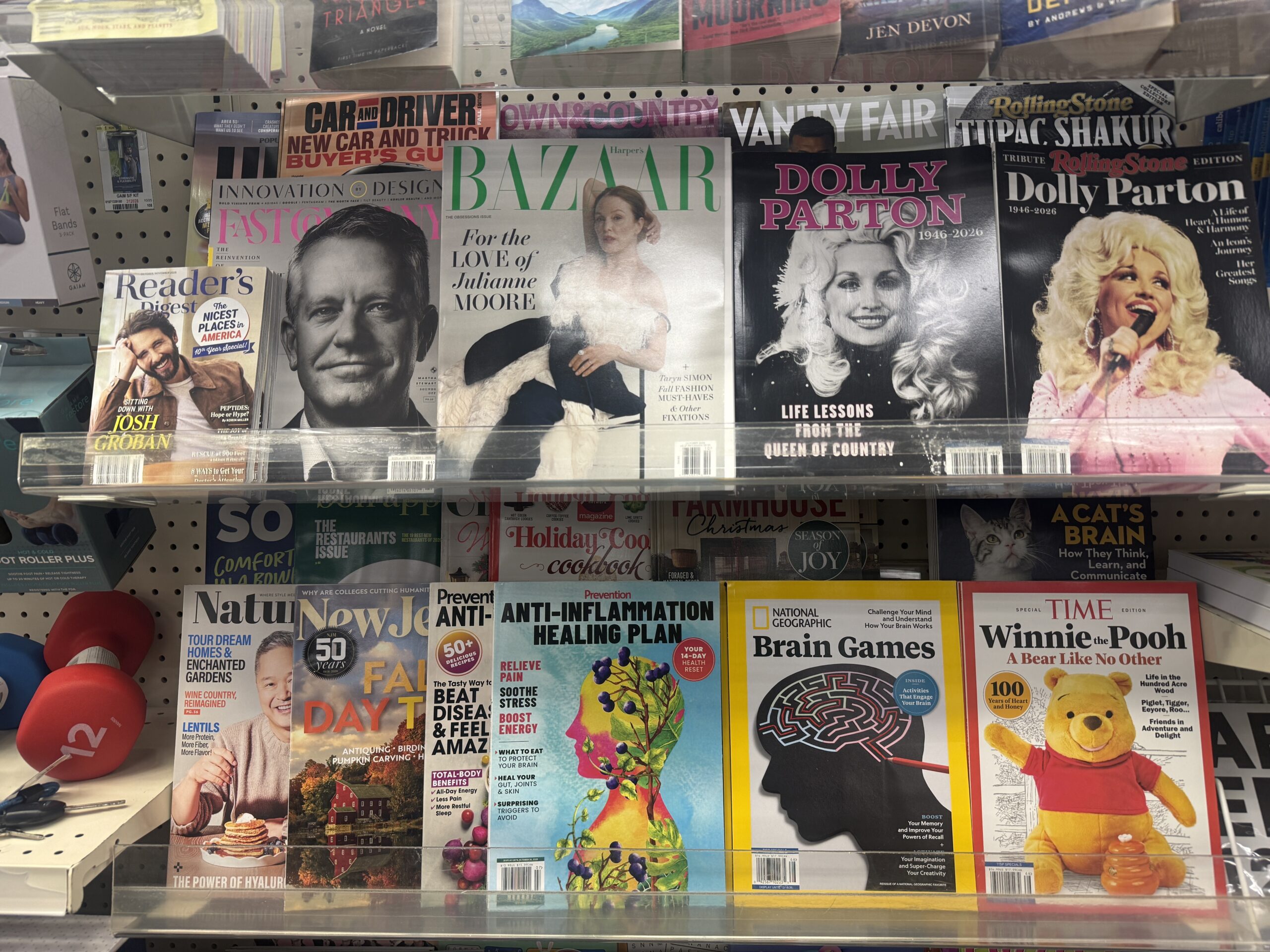
Set a budget of no more than $10 for a magazine. Choose one that catches your eye but that you’ll feel comfortable cutting up. Fashion magazines can be especially rewarding: their style spreads often pair unusual looks with colors that work well together. If you’d rather stay home, use a magazine on hand. Either way, the goal is to have plenty of images to browse and rearrange.
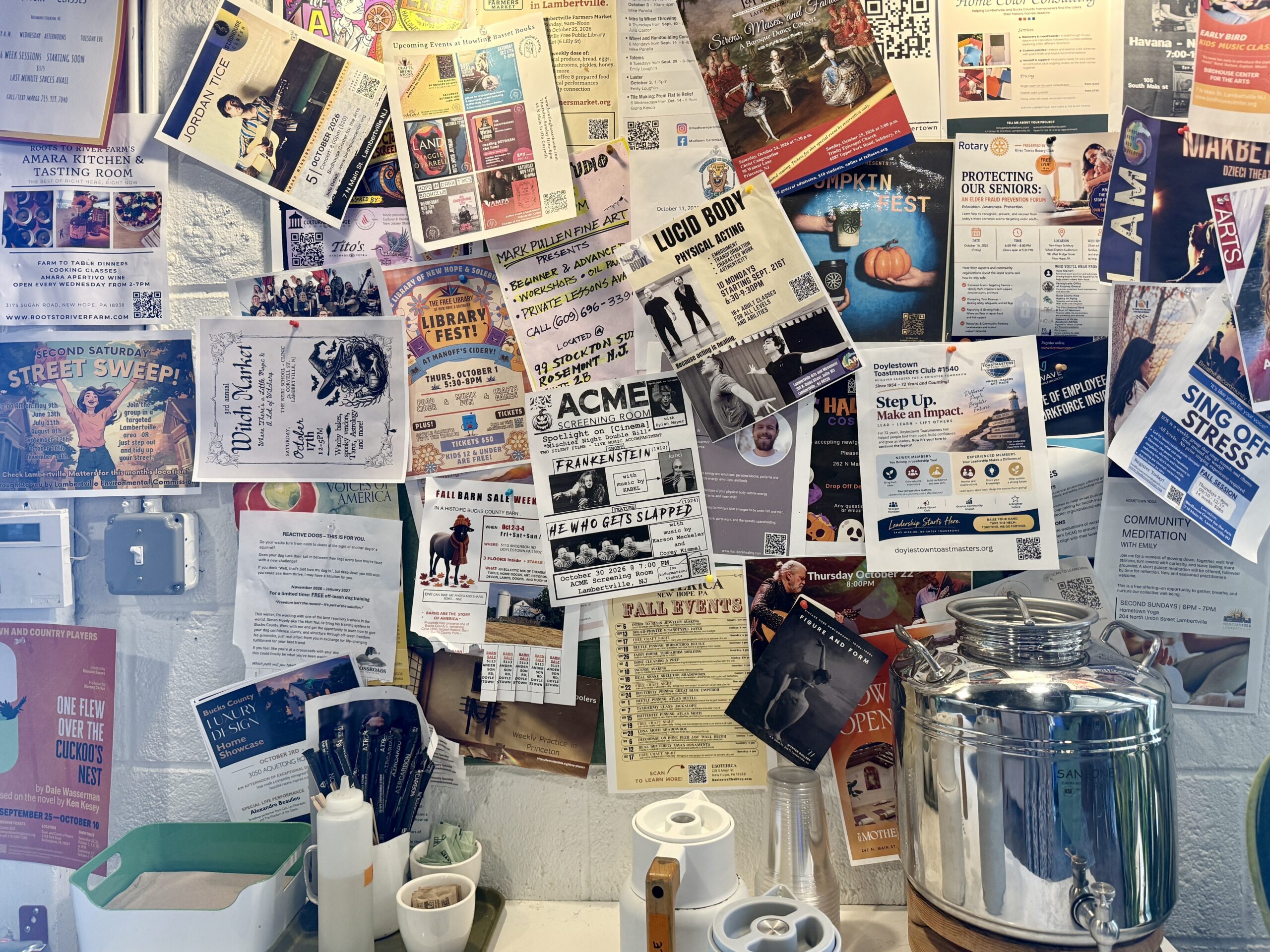
Once you have your materials, settle somewhere you can spread them out. The maker chooses a favorite local bulletin board and a nearby coffee shop, picking up a vanilla latte and a warmed apple braid. The bulletin board is usually a source of flyers to cut up after their events have passed, but for this session the magazine is the only paper source. Keeping that limit gives the three prompts a shared pool of images.
1. Put animal heads on people’s bodies

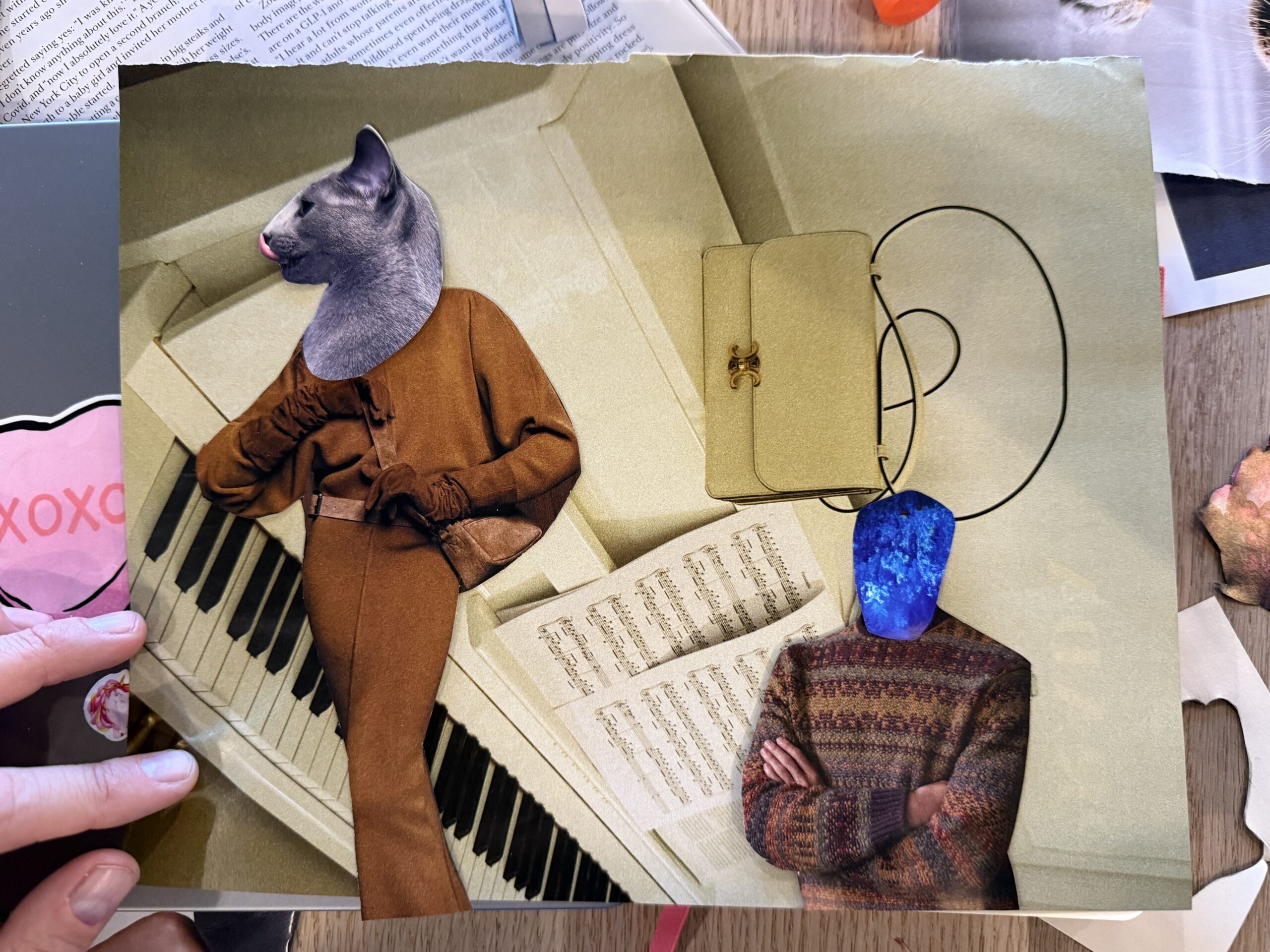
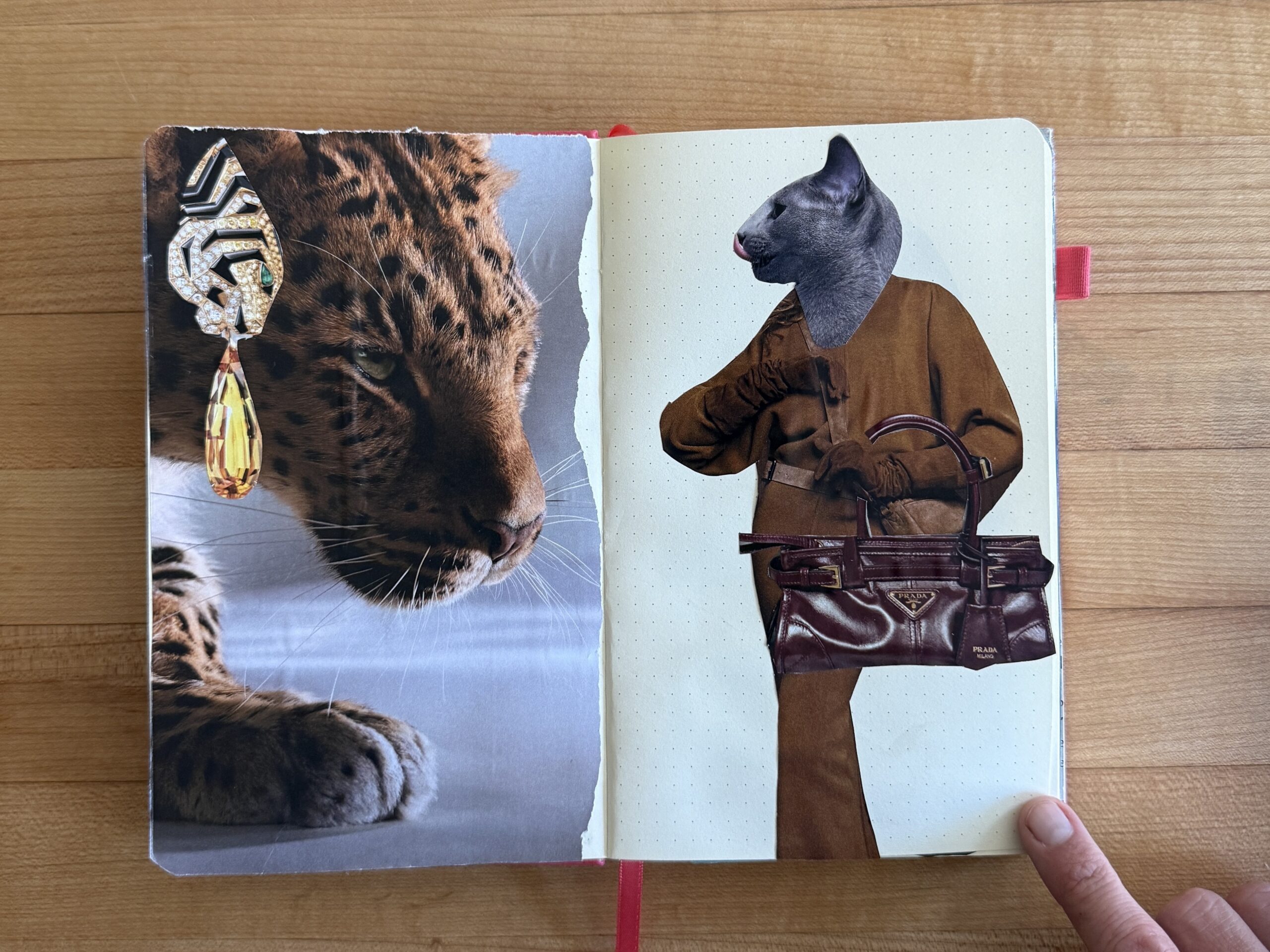
Begin by flipping through the magazine once to get a sense of its images and colors. For the first spread, the maker takes inspiration from artist John Hiltunen, who cuts out bodies and replaces their heads with animal faces. Look for a body in a pose that appeals to you, possible animal heads, and other pictures that might work as backgrounds or accents.
Cut out several candidates and try them together before reaching for the glue. Think of each body, head, and background as a piece you can audition. The maker first tries people with jewel-like heads, then spots a big cat that suggests a different combination. That kind of trial and rearrangement is part of the process: a cutout that seems promising by itself may feel crowded once it sits beside another image.
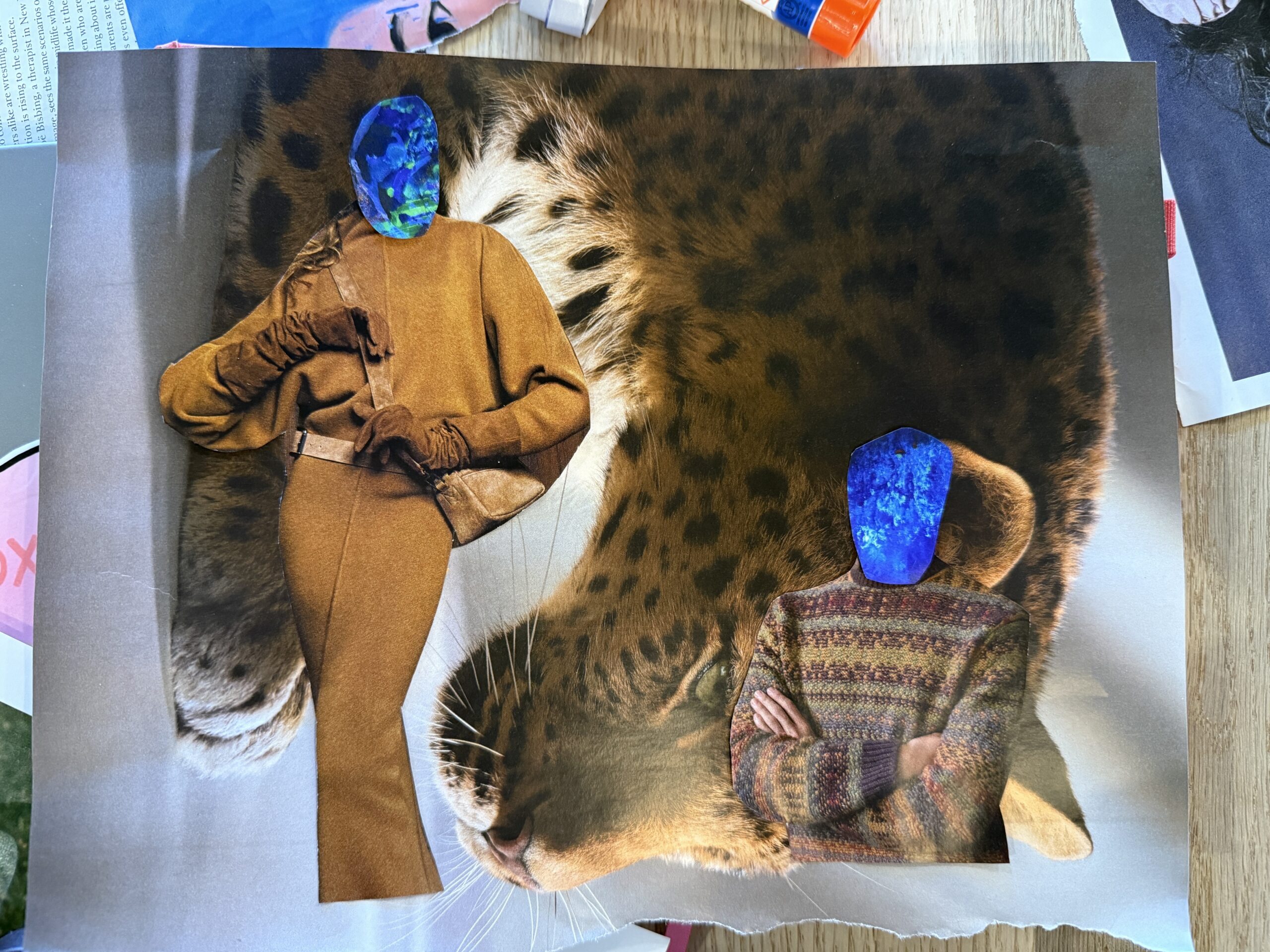
Try a background if the figures need more context, and check how its detail competes with the main collage. The maker likes the cat-headed figure but finds one background too busy, and has doubts about a person paired with a sweater gem. The big cat goes back into consideration. Looking again through the magazine helps settle the final arrangement; a further two passes turn up accessories that complete the spread.
2. Build a collection from repeated shapes
After seeing the magazine’s pages a few times, shift to a simpler prompt: choose one kind of image and collect several examples on a journal page. Eyeballs make an appealingly odd motif. Clouds, grass, and windows can work too, depending on the images available and the season.

Aim to find four to eight examples. Once you’ve chosen a motif, cut out the pieces and arrange them across the page. The maker favors unusual choices, recalling a spread ringed with elbows. In day nine of the Altered Book class, hands became the collection; the fingers, however, took too much fussy cutting to recommend that subject as an easy option.
Consider the arrangement as well as the subject. Here, legs near the top of the page create the impression of people floating into the sky. A photograph from a photo shoot balances the composition. The repeated pieces give the spread its pattern, while one contrasting image can help anchor the page.
3. Stack color cutouts
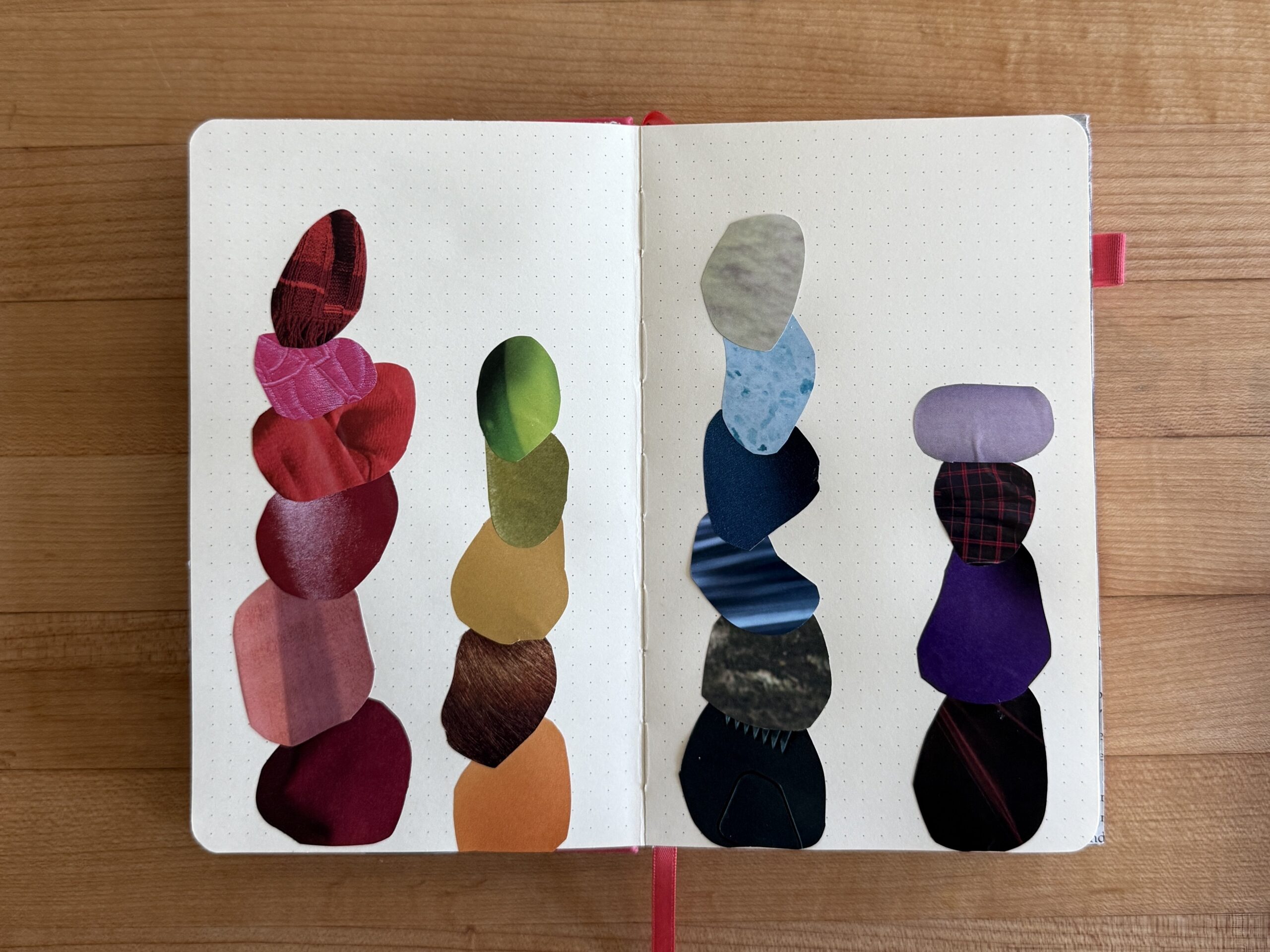
For the final pass, let go of specific objects and search the remaining magazine for color. Cut out small, irregular patches and arrange them in stacks, making a rainbow or another sequence that feels satisfying. The maker chooses a rainbow arrangement that gives the page a cheerful feel.
This quieter prompt also draws attention to looking closely at color. A simple grounding exercise can involve noticing one color around you; here, the same kind of attention becomes a page of collected shades. The maker finds the process soothing. Later, recognizing where the pieces came from can bring back the mood of the creative session and the private joke of the images you chose.
Across all three spreads, the useful rhythm is to browse, cut, arrange, and only then glue. The prompts give you a starting point, while the magazine supplies the surprises. Keep the leftover pages nearby: they may offer just the right image for the next round.