Sample No. 0151
Kids’ Sewing Kits for First Stitches, Felt Toys and Useful Accessories
Find a sewing kit for every stage, from toddler lacing cards to felt animals and wearable projects, plus practical tips for helping kids sew with confidence.
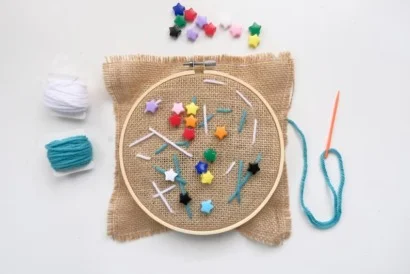
A good first sewing project gives a child a real skill to practice and something satisfying to hold at the end. The right kit makes that possible: materials should be manageable for small hands, instructions should be clear, and the project should suit the child’s experience. These picks range from simple lacing activities for preschoolers to detailed felt toys and practical accessories for older makers.
Choose a project that fits the child
For ages 3 to 5, look for blunt wooden or plastic yarn needles and materials with pre-punched holes. Children around 6 to 8 can often try large tapestry or blunt embroidery needles. Older children may be ready for standard needles with adult supervision. Read the kit’s age guidance and supervise children using needles and small parts.
Felt is a forgiving choice for a first soft toy: it doesn’t fray, holds its shape, and is easier to stitch than flimsy cotton. Wool-blend felt can also feel soft and stand up to uneven tension. Pre-cut pieces are helpful when a child is eager to start sewing; tracing and cutting can take up energy before the stitching begins.
Kits for early learners
Bead and button sewing kit by LittleExplorersPlay
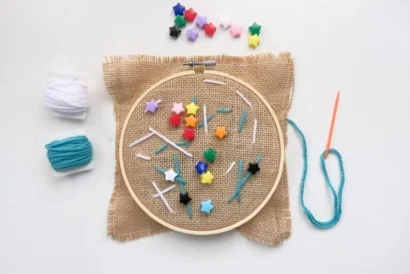
Best for: Toddlers and preschoolers building fine motor control.
A blunt needle, chunky beads, and colorful yarn let young children practice passing thread through holes. The activity introduces the repeated movement of pulling the needle through and bringing it back, while offering an accessible way to join in when older siblings or adults are sewing.
Shop the preschool bead sewing kit by LittleExplorersPlay
Wooden sewing cards by FoxTheMaker
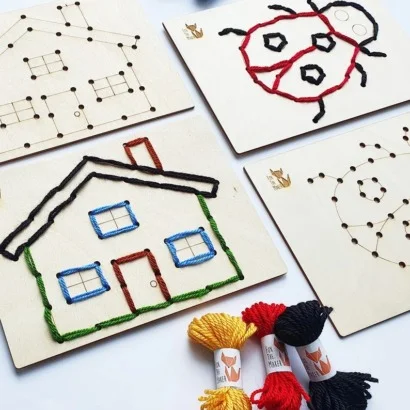
Best for: Toddlers practicing a pencil grip and coordinated hand movements.
This set includes two smooth wooden shapes with pre-drilled holes, a plastic needle, and four thread colors, packed in a cardboard gift box. The firm wooden base gives small hands something sturdy to hold while they practice simple in-and-out stitches.
Shop the Montessori wooden sewing kit by FoxTheMaker
Felt animals to stitch and keep
Kitten kit by Clara and Macy
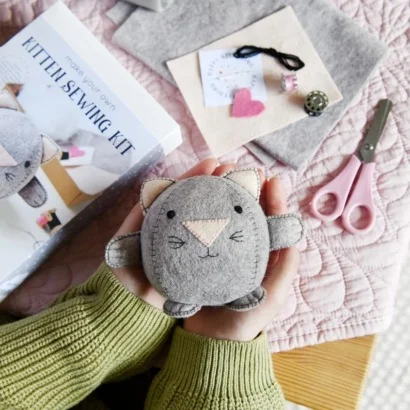
Best for: Beginners, eco-conscious families, and tweens who enjoy animal crafts.
The plastic-free kit comes in a 100% recycled box and includes wool felt, cotton thread on small spools, stuffing, a needle, templates, and a beginner stitch guide. Its simple stitches make it a project children and adults can take on together. After sewing, the packaging can become a miniature cardboard cat house for imaginative play.
Order the eco-friendly kitten sewing kit by Clara and Macy
Felt seal family by WeeThingsFiberArts
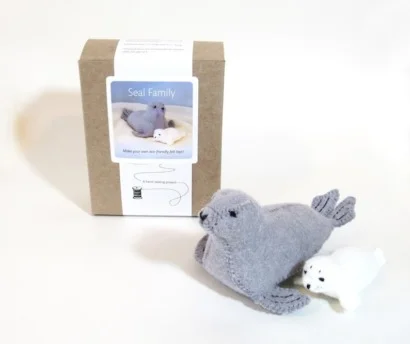
Best for: Confident young stitchers ages 10 and up.
Made in Western Massachusetts, this kit uses studio plant-dyed wool felt to make two harp seals: a 7″ gray adult and a 3.5″ white baby. The plastic-free box contains paper templates, illustrated instructions, a stitch guide, and natural wool materials. The smaller pup pieces call for more careful stitching, so this project suits children ready for detail.
Sew a plant-dyed felt seal family with WeeThingsFiberArts
Stuffed unicorn by DelilahIris
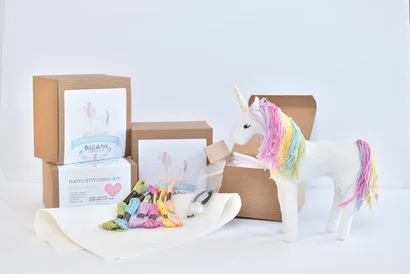
Best for: Creative children ages 8 and up who like fantasy crafts.
The kit includes wool felt, needles, thread, stuffing, doll eyes, and chenille wire for shaping the horn. The finished unicorn stands 8 inches tall and has a pastel rainbow mane and tail. Printable templates and online video and photo guides support confident beginners as they work through the hand-sewing steps.
Create a felt unicorn softie with DelilahIris
Mini woodland animals by LittleDear
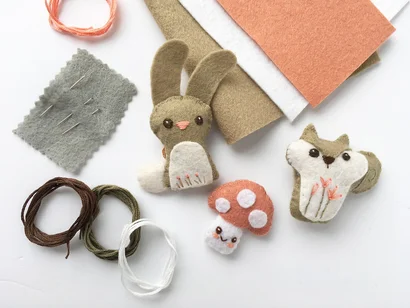
Best for: Beginners who want quick pocket pets or ornaments.
Make a bunny, squirrel, and 1.5-inch mushroom from three shades of thick wool-blend felt. The package also includes four skeins of DMC embroidery floss, pins, an embroidery needle, stuffing, and step-by-step instructions. Finished pieces measure 2 to 3 inches, and the project introduces basic decorative embroidery.
Stitch miniature woodland creatures with LittleDear
Felt frogs by DelilahIris
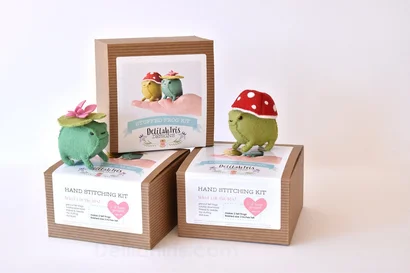
Best for: Experienced young crafters or adults and children sewing together.
Two 3-inch frogs, each wearing a tiny lily pad or mushroom hat, are the goal. The kraft box contains premium merino wool felt, eyes, chenille wire, stuffing, a needle, and thread. Digital tutorials are available on the maker’s website. The project uses hand sewing throughout and doesn’t require a machine.
Sew your own felt frogs with DelilahIris
Felt T-Rex by Laura Danby
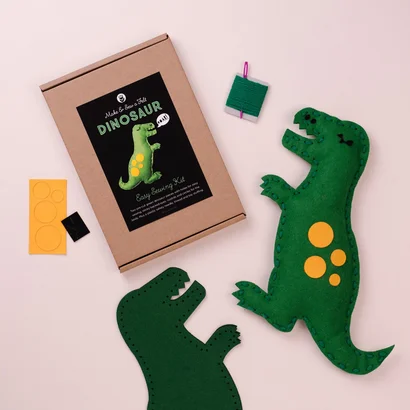
Best for: Dinosaur fans ages 4 and up starting out with sewing.
Two green felt body pieces come pre-cut and punched with sewing holes. A blunt needle, embroidery thread, and stuffing are included, while peel-and-stick felt spots, eyes, and nostrils avoid glue. Children can make a 10″ T-Rex with scissors and a little adult help.
Stitch a felt T-Rex dinosaur with Laura Danby
Felt fox plush by TheSoleilCo
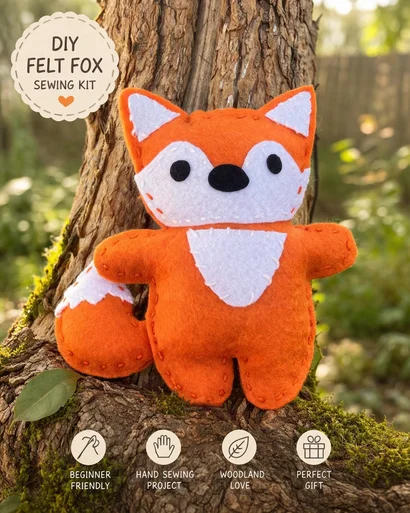
Best for: First-time stitchers, children, and teens looking for a screen-free project.
Pre-cut felt pieces remove the need for tricky cutting. The kit supplies embroidery thread, a sewing needle, stuffing, and step-by-step instructions for making a 7″ by 6″ fox plush. It’s described as a low-mess project, with a little adult supervision recommended.
Sew an adorable felt fox plush with TheSoleilCo
Projects to wear, use, and personalize
Organic cotton doll panel by LaLovie
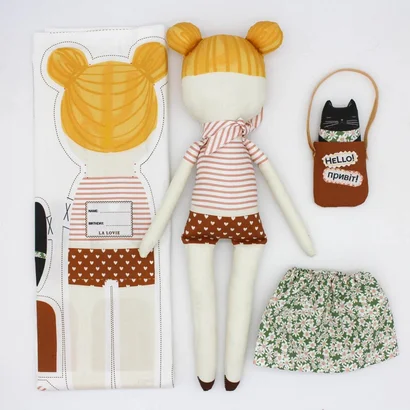
Best for: Creative children ready to make a personalized companion.
Printed in the USA on 100% organic brushed cotton, the panel makes a 14-inch rag doll, a skirt, a small tote bag, a scarf, and a matching 4-inch pet cat. The doll’s face is blank for drawing or embroidery, and the bag has international greeting labels to sew on. Set aside about two to four hours; a child can work independently or get some grown-up help.
Shop the organic cotton doll sewing panel by LaLovie
Scrunchie kit by FashionCampAtHome
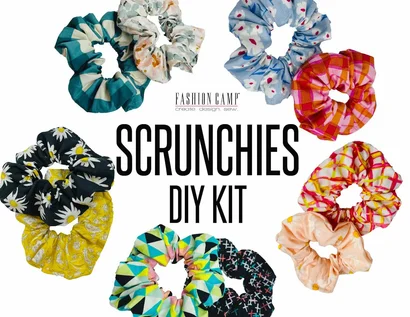
Best for: Fashion-loving tweens who want a quick accessory.
The kit makes two scrunchies and includes two fabric cuts in selected prints, elastic, a reusable pattern, printed instructions, and a password for a step-by-step video. The video demonstrates sewing the fabric tube, threading the elastic, and closing the seam.
Make your own hair scrunchies with FashionCampAtHome
Roll-up pencil case by BUUKLab
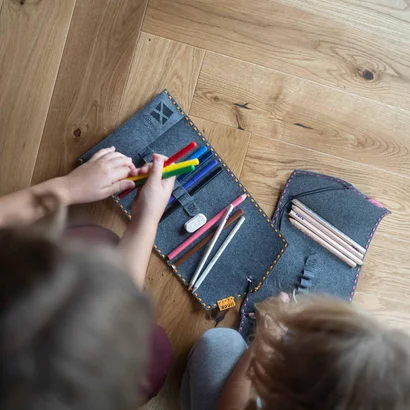
Best for: Children who want to make useful school supplies.
This kit guides kids through stitching a felt pouch for pens, pencils, or art markers. The holes or seams are planned for straightforward assembly, and attaching the closure introduces a simple button or hardware step.
Craft a roll-up felt pencil case with BUUKLab
Make the first sewing session easier
Keep the thread short: about the distance from the child’s wrist to elbow helps reduce tangles. A wire needle threader can also make setup easier for little fingers. To teach a running stitch, try a simple rhythm such as “down through the grass, up to the sky.”
Focus on persistence rather than straight seams. Uneven stitches are part of learning, and they give a handmade soft toy its own character. For a first lesson, begin with hand sewing: children can feel how thread tension works, understand where the seam joins the pieces, and control their own pace. The running stitch and whip stitch are useful starting points for felt toys and simple pouches.
Common questions from grown-ups
When can children begin sewing?
Some can start at 3 or 4 with lacing cards and blunt plastic needles. Around 6 or 7, many children have the fine motor control and patience for blunt embroidery needles and simple felt projects. Children ages 8 to 10 can begin learning sewing machine basics with adult supervision.
Should they learn hand sewing or machine sewing first?
Hand sewing is usually the more approachable first step. It gives children direct experience with thread tension and seams, and lets them work at their own speed. Once they understand how stitches hold fabric together, machine sewing can feel more familiar.
Which stitches should beginners learn?
Start with the running stitch, which moves forward through the fabric in a repeated in-and-out line, and the whip stitch, which loops over the edge of two fabric layers. Together, these stitches can carry a child through many felt toys and straightforward pouches.
Choose a project that matches the child’s interests and current skills, then let the first stitches be a little uneven. A finished animal, doll, or scrunchie gives them something to use and a reason to keep practicing.
You might also like:
- The best Halloween bag patterns for kids trick-or-treat fun
- DIY knotted bow headband free pattern
- Free kids tank top sewing pattern
Let’s keep in touch! You can find me on Facebook, Instagram, and Pinterest.
The post Best sewing kits for kids to learn real crafting skills appeared first on I Can Sew This.