Sample No. 0140
Woodworking Strength: Simple Ways to Care for Your Body at the Bench
Build grip, back and shoulder strength with simple workshop exercises and smarter work pacing, so you can keep making by hand.

A hand-built bookshelf meant to last through generations asks a lot of the person making it. Ripping, planing, chopping and carving can keep you at the bench for hours, and the work draws on your grip, shoulders, back and legs as well as your arms. A little regular care can help you keep making by hand for years to come.
Set the bench for the task
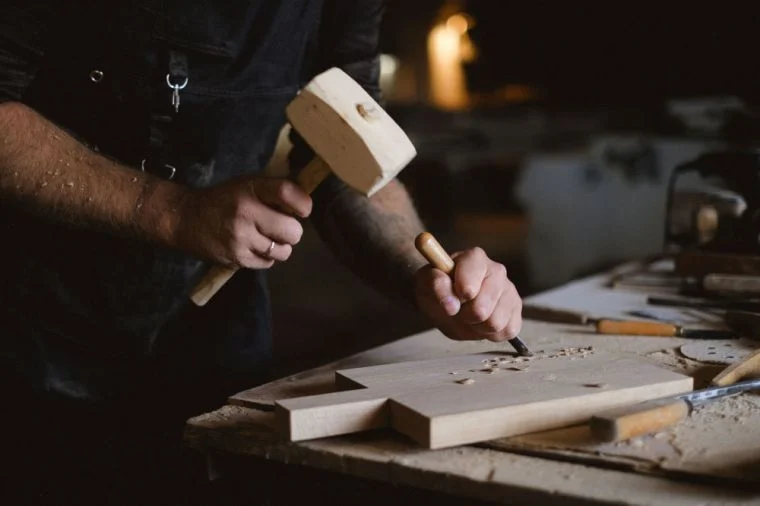
Bench height changes how your body handles the work. At a low bench, your legs and core can help drive a plane, so the stroke doesn’t have to come from your arms alone. Carving calls for a different setup: raising the bench can bring the work closer to your eyes and reduce the need to lean over it. For his carving, the writer sets his bench at 40 inches (1016mm). For planing, he keeps it low.
There isn’t one height that suits every operation. Adjusting the setup to the task can make the work easier to manage over a long session. The writer’s account of testing a higher bench is available here.
Give your grip a share of the work
Every hand tool depends on the hands that guide and hold it. Steering a plane while your body drives the stroke, or keeping a saw on line through a long rip, asks your forearms and grip to stay engaged. A sharp saw, good light and a well-tuned tool reduce the force needed to control the cut. That makes it easier to keep your grip light while still working accurately.
Grip strength often peaks in early adulthood, holds through middle age and then begins to decline. It can still be built later in life, including in your sixties and seventies. A simple way to train it is to carry a pair of solid offcuts or two buckets partly filled with water. Walk the length of the yard and back a few times, standing tall. The carry works the hands and forearms while also engaging the upper back. Begin with a manageable load, then increase it as the walk becomes easier.
Build support for planing and lifting
A low bench can make planing more comfortable when your legs and back are ready for the work. Those same areas help when you lift boards from a stack or turn a long piece end for end. Regular exercise may help reduce the chance of back trouble; back support belts and shoe insoles, by comparison, don’t appear to make a difference.
Two movements described in the source need little equipment. First, practise standing up from a sturdy chair without pushing off with your hands. Second, hinge at the hips, keep your back flat and pick an object up from the floor. You can combine that movement with carrying. Start with a light object, then add weight or use a lower seat as the movement gets easier.
Train shoulders and spread out demanding work
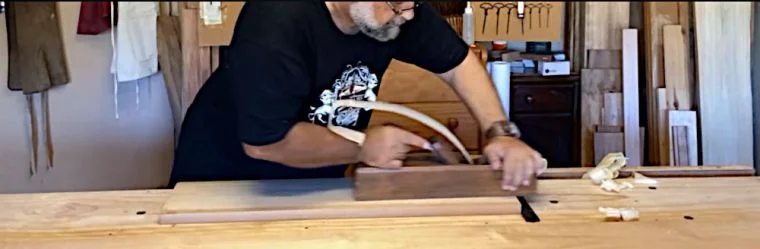
Planing, sawing and chopping often keep your arms in front of you and your head angled toward the work. To balance that position, the writer recommends training the muscles between the shoulder blades. Loop a resistance band low around a heavy bench leg, step back, draw your hands toward your ribs and bring your shoulder blades together. Start with a dozen or so repetitions when you pause for a breather.
Strength work twice a week, with the challenge increasing gradually, is described as enough for many people to build strength, including after age 65. For people who already lift weights, Huuman’s training plan starts with two days a week and offers one example of how to arrange sessions. The writer also points to the Huuman app, which covers strength, movement and recovery. These are the author’s personal recommendations; the article says he explored the service after the company contacted him and chose to share it because he found it worth recommending.
How you schedule workshop tasks matters too. A full day of heavy stock preparation can pile demand onto your hands and back. Try spending the morning planing and using the afternoon for marking out, sharpening or finishing. Breaking up the heaviest work gives your body a change of task while keeping the project moving.
Keep the goal in view
The point isn’t to turn the workshop into a gym. It’s to give your body enough strength and movement to support the work you enjoy: planing, sawing, chopping and carving. A few carries, chair stands, hip hinges or band pulls take little equipment, and regular practice is the part that counts. Think of that routine as workshop upkeep, much like keeping an edge sharp.
The writer’s reason for building by hand is personal: he hopes the bookshelf he is making for his son will one day be passed on to the next generation. Looking after your hands, shoulders, back and legs can help keep the bench part of that story. If an exercise causes pain, or you have a heart condition or a condition that affects movement, speak with your GP or a physiotherapist before beginning.