Sample No. 0077
Rediscovering October Gardening Essentials in Tennessee: A 2026 Update
Explore an updated checklist for October gardening in Tennessee that compares timeless advice with modern recommendations for a thriving fall garden.

October Gardening Essentials: Embracing Tradition with Modern Insights
As we approach October, it’s time to turn our attention to essential gardening tasks that prepare our landscape for the cooler months. Many time-honored tips from past gardening calendars remain relevant, while some methods need re-evaluation based on recent advancements in horticulture. In this article, we'll explore how October gardening practices in Tennessee have evolved since the early 2000s, focusing on key tasks that still resonate today.
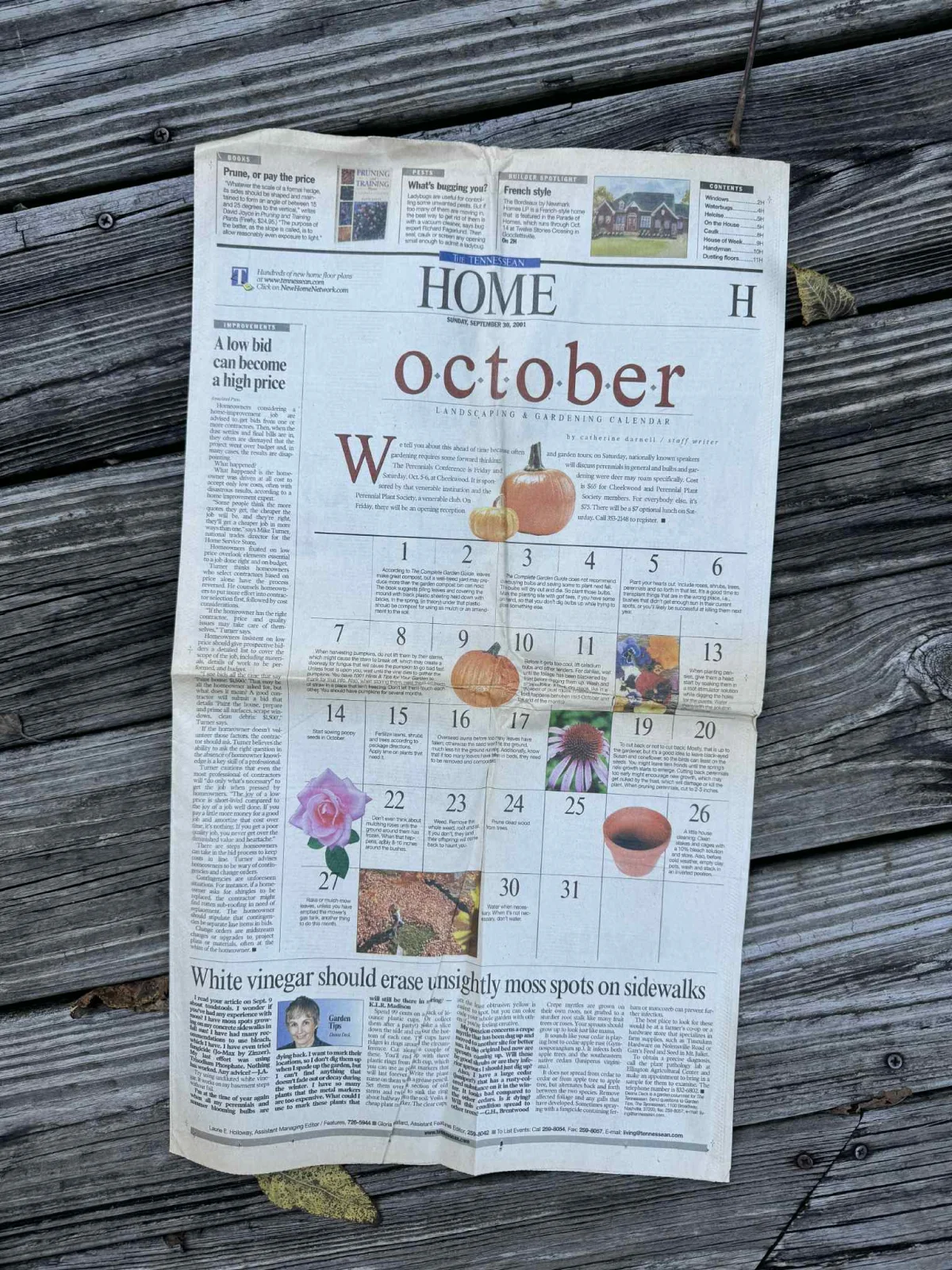
1. Utilizing Fallen Leaves Effectively
In the past, gardeners were advised to simply pile fallen leaves and let them decompose over time. Today's approach still utilizes leaves as an invaluable resource, but with improved techniques. Instead of allowing leaves to compact into a mound covered in plastic, modern advice suggests shredding leaves with a mower and either composting them directly or mulch-mowing them back into the lawn. This method not only recycles organic material but also improves soil health.

Tennessee Smart Yards encourages homeowners to keep landscape waste on-site whenever feasible, recommending practices like creating leaf mold or using shredded leaves as mulch. This shift in technique underscores a crucial understanding: fallen leaves enrich gardens, rather than being a burden.

2. Rethinking Cleanliness in the Garden
Twenty-five years ago, a tidy fall garden meant removing as much material as possible. However, current practices recommend a more selective cleanup approach. While it’s important to remove diseased plant material to prevent the spread of infections, allowing some organic matter—like seed heads and stems—to remain supports wildlife during winter. This method helps maintain a healthy ecosystem, demonstrating that a little mess can be beneficial.

3. Proper Handling of Pumpkins
Harvesting pumpkins remains a straightforward practice that hasn't changed: always lift pumpkins from underneath instead of by their stems. This prevents damage that could lead to decay. Storing pumpkins in a cool, dry place, away from direct contact with one another, ensures optimal preservation, reflecting advice from both the past and present.

4. Planting Fall Bulbs: A Timeless Task
Autumn is the prime time for planting spring-flowering bulbs. The advice to avoid overbuying bulbs still holds true; it’s better to plant fewer healthy bulbs than to let extras languish all winter. Marking planted bulbs with items like golf tees, as suggested by older gardening tips, remains a clever and functional technique to recall planting locations.

5. Managing Tender Bulbs and Tubers
As temperatures drop, knowing when to lift tender plants—like caladiums and dahlias—becomes crucial. The original calendar advised removing them before significant frost, a sound practice that has remained unchanged. However, it’s essential to understand the specific needs of each plant type, as different bulbs and tubers may have varied storage requirements.

6. Fertilizing Wisely
In 2001, blanket fertilization was a common recommendation come October. Today, however, the emphasis on soil testing to determine specific needs has shifted the conversation. Tennessee Smart Yards advocates for amending soil based on test results, moving away from the practice of over-fertilizing. This updated strategy helps maintain ecological balance, ensuring plants receive only what they genuinely require.

7. Overseeding: A Case of Mixed Advice
While the old calendar encouraged overseeding lawns, current recommendations suggest this practice should depend on grass types. Cool-season and warm-season grasses have particular care guidelines, so identifying which type is in your lawn is essential to timing overseeding correctly.

8. Encouraging Wildlife with Seed Heads
Leaving seed heads intact for birds—to feast on seeds—is a segment of the 2001 advice that has become even more valuable over the years. Modern gardening practices emphasize creating habitats for local wildlife, highlighting the importance of allowing some natural elements to persist in the garden, thus providing food and shelter for birds and beneficial insects throughout the winter months.

9. Careful Approach to Rose Winterization
The 2001 calendar emphasized waiting for the ground to freeze before mulching roses, a guideline that has evolved. Today, understanding the specific winter needs of different rose varieties is crucial, as well as applying mulch correctly to protect their roots. The general advice remains: mulch is beneficial, but it must be tailored to the particular plant's requirements.

10. Weeding: The Battle That Never Ends
The guidance to pull weeds by the roots is timeless. This basic rule holds true year after year; removing weeds completely helps ensure they do not resurface in subsequent seasons. Observing this age-old wisdom assists in planning effective strategies for weed management for the following year.

11. Pruning with Caution
The October calendar suggested pruning dead wood from trees, but modern advice brings caution to this task. Pruning practices can vary drastically from one plant to another, particularly when it comes to flowering shrubs. It is essential to know each plant’s specific needs before proceeding with any pruning to avoid curtailing next year’s blooms.

12. Watering: Timing is Everything
Consistent with past recommendations, monitoring soil moisture is vital. While older advice directed gardeners to water only as needed, this principle remains sound. As temperatures drop, less water is typically required, making it critical to adjust watering habits according to climatic conditions.

Conclusion: Yesterday’s Advice, Today’s Wisdom
Reflecting on gardening advice from 2001 unveils a foundation of principles that have stood the test of time. While some practices have adapted to modern understanding, core lessons about composting, soil care, and wildlife support remain relevant. Essential gardening wisdom—like properly handling produce, understanding plant needs, and being mindful of local ecology—endures across generations.
Your October Gardening Checklist for Tennessee
To help you stay organized this season, I’ve compiled a practical October Gardening Checklist incorporating both vintage insights and current recommendations:
- ☐ Monitor soil moisture as temperatures cool
- ☐ Compost or mulch-mow healthy fallen leaves
- ☐ Remove diseased plant material
- ☐ Leave beneficial seed heads and stems for wildlife
- ☐ Pull persistent weeds before winter
- ☐ Take a soil sample before applying unnecessary fertilizer or lime
- ☐ Plant appropriate fall bulbs
- ☐ Protect or lift tender plants as needed
- ☐ Harvest and store pumpkins properly
- ☐ Check trees for dead, damaged, or hazardous branches
- ☐ Clean and store garden pots and tools
- ☐ Make notes about this year’s garden for next spring
Gardening is an ongoing journey filled with learning, adaptation, and commitment to stewardship. By following these tips and embracing both tradition and innovation, you can cultivate a thriving garden this October.