Sample No. 0201
Craft News: Cricut’s AI Designer, Bobbin Lace and Glass Made with Shells
Explore Cricut’s new conversational design tool, renewed interest in bobbin lace, experimental glassmaking and fresh developments across sewing and papercraft.
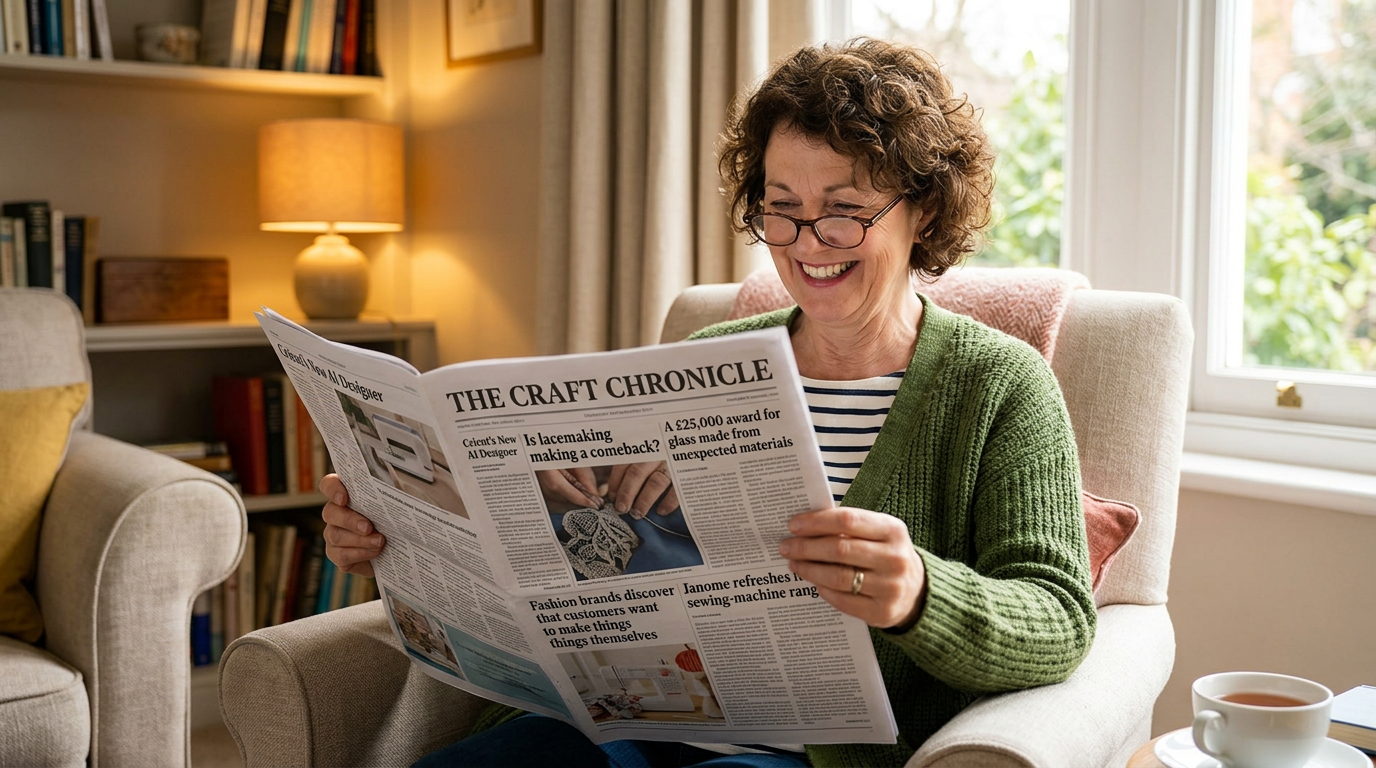
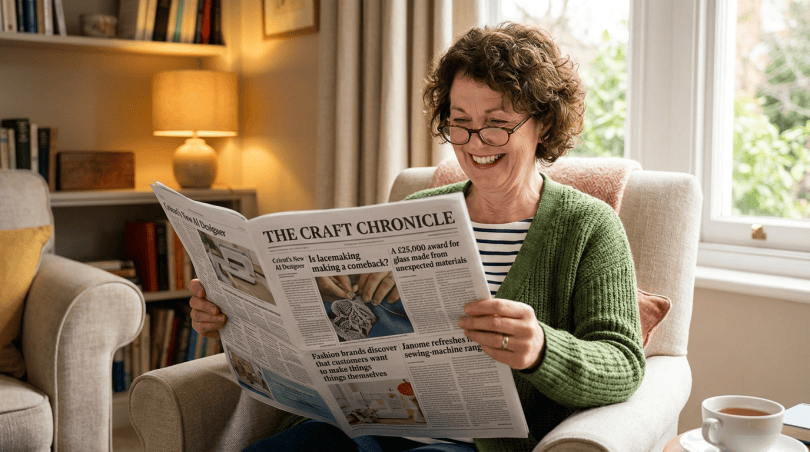
This fortnight’s craft news points in two lively directions: toward tools that make designing more accessible, and toward hand skills that reward patience and practice. Cricut’s new AI Project Designer turns written prompts into cutting machine designs, while young makers are bringing bobbin lacemaking to new audiences. Glass made with discarded materials, clothing repair initiatives and updates across sewing and papercraft round out the picture.
Cricut turns project descriptions into cutting designs
Announced on 7 October, Cricut’s AI Project Designer is a new feature within Design Space. Users describe a project in everyday language, and the tool generates a design that can be opened on the Design Space canvas for further editing before making.
That changes the first step for people who have an idea but aren’t comfortable building it from shapes, paths and layers. Instead of learning the software’s controls before getting started, a maker can begin by explaining the result they’re after, then ask for adjustments if the first draft misses the mark.
The current version is aimed at two dimensional projects that use a single operation. Cricut gives labels, decals, gift tags, party decorations and designs for clothing or accessories as examples. It isn’t described as a replacement for more involved Design Space work, so users should be cautious about expecting it to produce complicated layered designs or mechanically intricate projects.
Practical results will matter as much as an appealing screen preview. Fine details, cutting complexity and whether a design can actually be made are the tests that will show how useful the tool is. Cutting machine owners know that an attractive image doesn’t always translate into a workable cut file.
Access is available to Design Space users, but the feature runs on AI Credits. Free users receive a one time allocation, while Cricut Access subscribers receive monthly credits based on their subscription. Each generation or regeneration uses a credit, and monthly credits that go unused don’t carry over. That makes iteration part of the cost calculation: a prompt may need several tries before the design feels right.
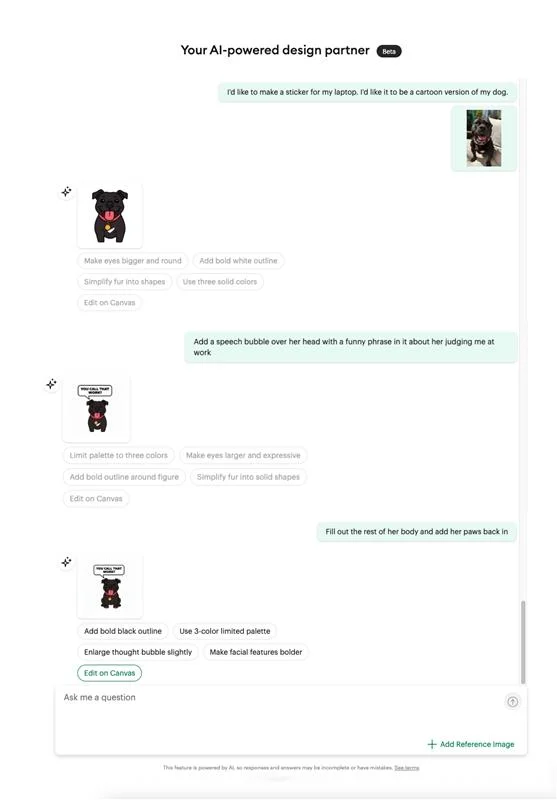
There’s a useful tension here. A conversational tool could help people who find Design Space daunting make their own projects, yet it may also reduce the incentive to learn how designs are constructed. Neither result is certain. For now, Cricut is extending its use of AI in Design Space from image generation toward creating a project intended for a cutting machine. The key question is how well it handles the practical details that turn an idea into something makeable.
Bobbin lacemaking finds new makers
While digital tools aim to smooth the route from idea to project, renewed interest in bobbin lace draws people toward a skill built through slow, physical practice. Two newspaper features in early October described younger makers introducing the traditional technique to wider audiences.
Bobbin lacemaking uses threads wound onto small bobbins. The maker twists and crosses those threads, using pins to hold the developing pattern in place. The work is intricate and mathematical, but the method can produce a wide range of designs. Some new practitioners are drawn to textile art or contemporary patterns; others enjoy the concentration and repetition in the process itself.
That interest matters because the craft has faced a decline in practitioners. Heritage Crafts reports that the number of skilled bobbin lacemakers has fallen by approximately 30% since its Red List research began. It points to an ageing practitioner population and too few training opportunities as particular concerns.
A feature in The Times on 5 October profiled young lacemakers sharing the craft through workshops and social media. Florian Barrows is among those introducing others to the technique through online videos. The Financial Times followed on 6 October with a look at groups including London Lace Club, founded by Lauren Watson and Amelia White, as well as similar initiatives in North America.
The attraction isn’t necessarily a wish to recreate historic lace exactly as it was made before. For some, the technique is a way to explore new patterns and materials; for others, its slow, focused rhythm is the point. That’s a striking fit for a moment when many crafts are promoted for speed and convenience. Here, time and attention are part of the pleasure.
Scotland marks 150 years of lace production
Handmade bobbin lace and industrial lace production are separate traditions, but both depend on people keeping specialist knowledge in use. From 7 to 10 October, Darvel, Newmilns and Galston held the first Irvine Valley Lace Festival, marking 150 years since Alexander Morton introduced powered lace production to the area in 1876.
At its height, the Irvine Valley had around forty factories. Two working mills continue the industrial tradition today. The festival brought together historic lace displays, demonstrations, factory visits and workshops. One activity explored combining locally produced lace with pottery decoration.
The distinction between the festival and the renewed interest in handmade lace is worth keeping clear: the Scottish celebration focused on machine produced lace, while the younger makers gaining attention are practising bobbin lacemaking by hand. Their tools and histories differ, yet both stories show how a craft can remain relevant when people find reasons to engage with it in the present.
Glass artist Lulu Harrison receives £25,000 award
On 8 October, glass artist and material researcher Lulu Harrison was named winner of the QEST Sanderson Rising Star Craft Award. The award provides £25,000 to support the development of her work, which brings traditional glassmaking knowledge together with research into locally available and discarded materials.

One thread in Harrison’s work began with waste from the fishing industry. After living in Cornwall, she investigated materials connected with local fishing communities, including shells. This led her to traditional glassmaking approaches that use calcium rich material from shells as part of the process.
Working with alternative ingredients takes more than putting waste into a furnace. Glassmaking depends on how its components behave and on the temperatures and processes used to transform them. Changing the ingredients can change the properties of the finished glass, so material research and technical knowledge go hand in hand.
Harrison’s work connects older understanding of materials with new questions about making. It also invites a careful look at sustainability: a discarded material may have potential, but its use doesn’t automatically make a process environmentally beneficial. Energy demands, processing and where materials come from still matter. The judges recognised Harrison’s technical skill, sustainability research and commitment to keeping specialist knowledge alive.
Fashion turns toward making, mending and upcycling
A 1 October Vogue Business feature looked at growing interest in knitting, sewing, clothing repair and upcycling, and at how fashion companies are responding. TikTok figures supplied to the publication show videos tagged #CraftTok rose by 60% globally over the previous twelve months, while #SewingTok videos rose by 90%. These are platform reported figures about online activity, not an independent count of how many people craft.
Some companies are offering practical ways for customers to make and repair clothing. On 1 October, Levi Strauss & Co. expanded its Wear Longer Project into Europe. The initiative provides resources and teaching intended to help younger people repair and personalise clothes, including sewing on buttons, patching holes and fixing hems. Company research indicates that younger consumers want to keep clothes longer but may not have all the skills needed to do so.

Other businesses are selling patterns, materials and kits for customers who want to make their own garments. Northern Irish knitwear designer Hope Macaulay has built a yarn and pattern business alongside her finished knitwear. French fashion company Promod has been developing fabrics, patterns and kits, including materials that come from its clothing production.
There are commercial reasons for these offers, but they also show brands responding to people who want a more hands on relationship with clothing. Some makers want to understand how a garment is made, some want to extend its life, and others would rather spend several evenings creating their own version than buy a finished piece. For many crafters, the satisfaction is in the making itself.
Updates from sewing, textiles and papercraft
Janome refreshes selected machines
Janome UK has announced limited edition updates to its 230DC and 360DC computerised sewing machines. Both revised models have an easier bobbin loading arrangement and a sensor intended to prevent stitching when the presser foot hasn’t been lowered. The 360DC Limited Edition also adds an automatic thread cutting button.
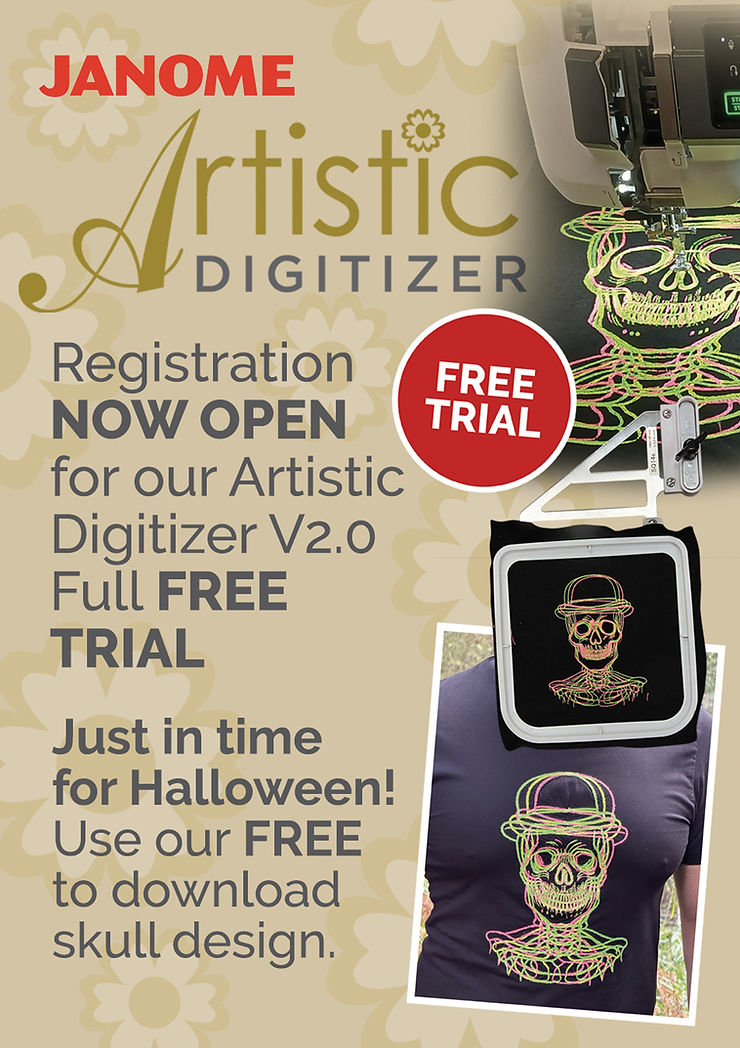
Janome has also announced improvements to its Atelier range. The Atelier 8 gains features aimed at free motion quilting and sewing thicker materials. For machine embroidery, UK residents can try Artistic Digitizer V2.0 free until 31 October; registration closes on 26 October.
Knit + Stitch returns to Alexandra Palace
Knit + Stitch ran in London from 8 to 11 October. The event, previously called The Knitting & Stitching Show, brought together more than 300 specialist suppliers with workshops, demonstrations and textile art exhibitions. Its programme placed traditional knitting and embroidery alongside experimental textile work, reflecting the range of practices that now sit under the textile crafting umbrella.
Clare Woods tapestries translate watercolour into weaving
At London’s Garden Museum, an exhibition opening on 9 October presents three large handwoven tapestries by artist Clare Woods, made in collaboration with Edinburgh’s Dovecot Studios. Threads of Ascent transforms small watercolour paintings of climbing weeds into monumental woven works.
The paintings feature bindweed winding around industrial fencing and plants reclaiming abandoned spaces. Moving those images from watercolour into woven textile changes both their scale and material character. The free exhibition runs until 5 November.
Heritage Crafts fund supports endangered skills
Heritage Crafts is accepting applications to its Endangered Crafts Fund, which offers grants of up to £2,500 for crafts listed as endangered or critically endangered. Eligible project ideas include specialist training, equipment, teaching resources and work to make threatened skills more sustainable. The stated deadline is 5pm on Friday 16 October.
Altenew adds practical papercraft tools
Altenew launched its October collection on 7 October, with new floral stamps and layering dies alongside small reusable sticky positioning mats. The mats are designed to keep paper and stencils in place during stamping and ink blending. The release also includes storage albums for finished handmade cards.
These additions are modest compared with a new machine or digital design tool, but they address familiar workshop needs: keeping materials steady and protecting completed cards. A small practical improvement can earn its place on a craft table without needing a motor or a screen.
Different routes to the same pleasure
Cricut’s AI Project Designer and the renewed interest in bobbin lace suggest very different ways into making. One aims to reduce the technical steps between an idea and a cutting project; the other asks makers to learn a demanding physical skill through practice. Both can help people turn an interest into something tangible.
There’s room for technology that opens a door for beginners and for techniques whose appeal lies in mastering the process. The same craft world can embrace conversational design, hand worked lace and experimental glass made with discarded shells. What connects them is curiosity about how things are made, and the pleasure of making something with your own hands.