Sample No. 0158
Cricut StickerPix, Craft Training and the Skills Makers Need to Pass On
Cricut’s new print and cut machines sit alongside a pressing question: where will the next generation learn specialist making skills?
Craft’s next chapter depends on two things at once: tools that make projects easier to complete, and people who can teach skills that take years to learn. This fortnight’s news brings those ideas into focus, from Cricut’s new home printing machines to concerns about specialist degree courses, alongside practical support for heritage skills and a busy calendar of exhibitions and open studios.

A print, laminate and cut workflow in one machine
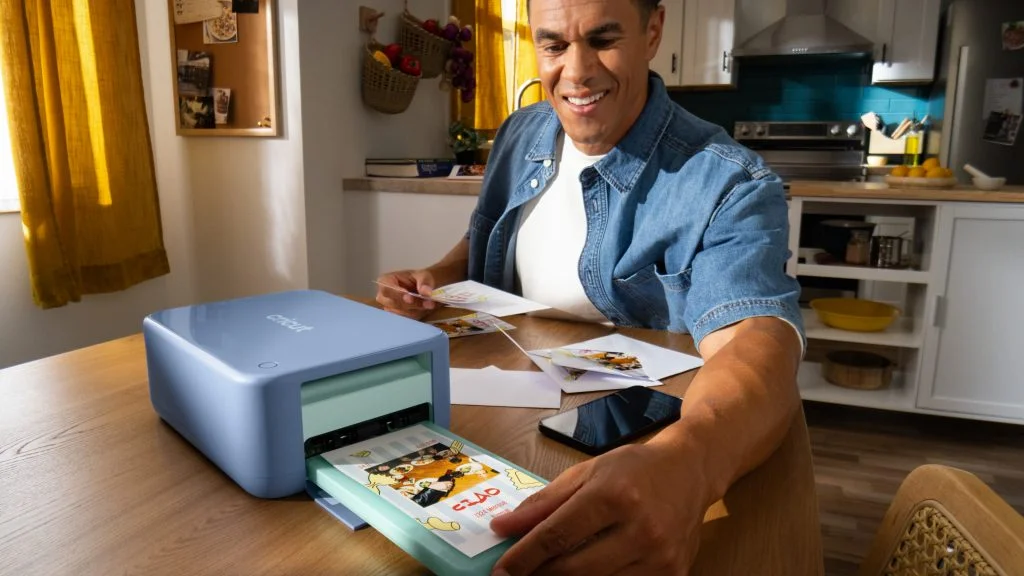
Cricut launched StickerPix on 24 September, stepping into home printing with a pair of compact machines for stickers, labels, photographs and photo cards. The line has two models: StickerPix Print and StickerPix Print + Cut.
StickerPix Print combines a compact dye-sublimation printer and laminator. It works with pre-cut sticker sheets and photo media. The Print + Cut version adds an integrated fine-point blade, so it can print a design, cover it with protective laminate and cut around custom sticker shapes in the same machine.
That joined-up process is the main distinction. Making printed stickers has often meant printing artwork on one device, then moving the sheet to a Cricut cutter. StickerPix brings those stages together. Its thermal dye-sublimation system also differs from a standard inkjet printer: Cricut says the prints resist water, scratches and fading, and the machines don’t use conventional ink cartridges.
Both models connect to Design Space on mobile and desktop. That keeps StickerPix within Cricut’s existing software ecosystem and extends the company’s range beyond cutting machines, heat presses and materials into personal printing.
Whether a dedicated printer makes sense depends on the maker’s setup and projects. Someone who already has a printer and a Cricut machine with Print Then Cut may have little reason to add another device. For a maker focused on stickers, journalling, labels, photos or personalised gifts, combining printing, laminating and cutting could save steps and reduce handling.
In the UK, StickerPix Print + Cut is listed at £249.99 and StickerPix Print at £159.99. UK reports say both models are appearing at retailers including Currys and John Lewis. StickerPix signals a broader direction for Cricut: building more of the path from a digital design to a finished object into its own product range.
Training places matter as much as workshop access
A more difficult development comes from Edinburgh College of Art. The college has confirmed that it will stop admitting new undergraduate students to Jewellery and Silversmithing, Textiles, and Performance Costume from 2027. Students already enrolled will be able to finish their degrees, but the programmes will close to incoming students.
Craft Scotland published an open letter on 21 September calling for the courses to be reinstated. Heritage Crafts, Applied Arts Scotland, Design-Nation and other organisations have backed the appeal, with concern reaching beyond Scotland to groups elsewhere in Britain and Europe.

The college says its decision followed analysis aimed at supporting the resilience and sustainability of its wider operation. It also says specialist expertise and technical facilities linked to the subjects will be retained, with some specialist teaching continuing through electives open to other students. ECA is investing in facilities for digital making, glass, ceramics and casting as well.
Those details matter, but access to a workshop is different from sustained training in a discipline. Jewellery, silversmithing, textiles and costume rely on knowledge that’s difficult to gain from written instructions or videos alone. Learners need to see how materials respond, how a tool is handled, and how an experienced maker spots trouble early. Demonstration, repetition and correction pass on the judgement that builds with practice.
That makes specialist education part of the same chain as preserving heritage techniques. Keeping an object or a workshop available doesn’t automatically preserve the knowledge needed to make, repair or teach that work. The continuing appeal will be one to watch because the decision affects where future makers can develop those skills.
Thirty-five bursaries support heritage craft learners
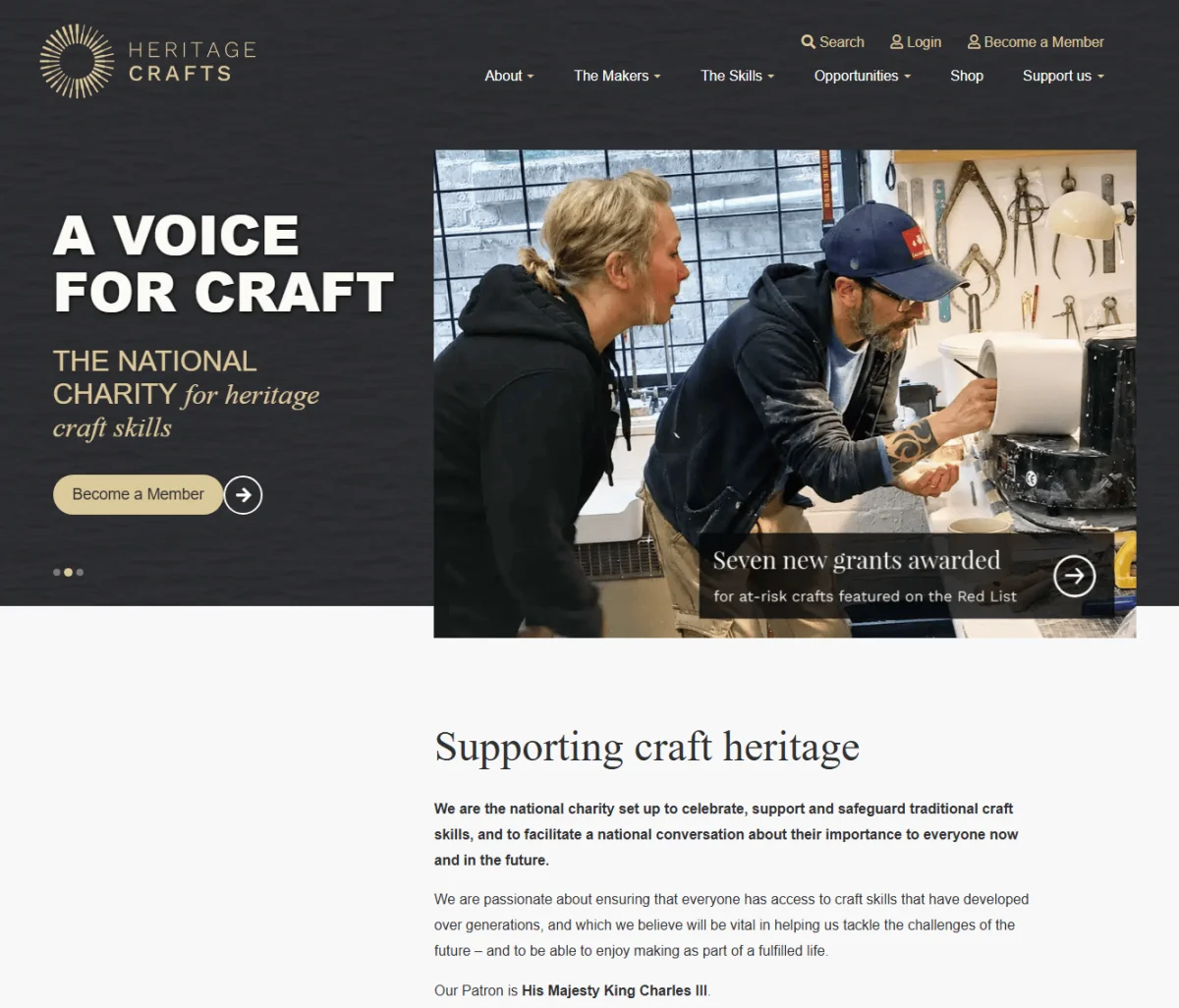
Heritage Crafts has awarded 35 new training bursaries to people learning heritage craft skills across the UK. Each bursary can provide up to £4,000 toward specialist, hands-on training. These awards follow 19 bursaries given earlier in the year.
The recipients are working across a wide range of crafts. John Allison, for example, is developing leatherworking and repair skills through saddlery training. Such support gives learners time with people who already know the techniques, an opportunity that becomes harder to arrange when experienced teachers and specialist instruction are scarce.
A craft survives through the people who can practise and pass it on. Training bursaries help extend that knowledge to another maker, one skill at a time.
Meet the makers at Goldsmiths’ Fair
Goldsmiths’ Fair returned to Goldsmiths’ Hall in London, opening its first week on 22 September and beginning its second on 29 September. Across the two weeks, 138 jewellers and silversmiths are showing their work. The exhibitors include three makers appearing at the fair for the first time and ten early-career makers supported through the Emerging Business Bursary scheme.
The event gives visitors a chance to speak directly with makers, ask about their processes and buy from them. That conversation adds context to a finished piece: who made it, which skills it called for and why the maker chose a particular approach. The fair runs until 4 October.
Exhibitions, open studios and new classes
In Bristol, Connections Through Wood opened at Centrespace on 18 September. The exhibition brings together furniture makers, green woodworkers and sculptors working with locally sourced timber. It considers the boundary between useful woodworking and sculpture, with work by established makers and younger award-winning craftspeople. The exhibition continues until 30 September.
Glasgow’s Scottish Glass Society annual exhibition, Connections, ran from 16 to 23 September. Its work ranged across stained and fused glass, casting, sculpture and mixed media, with live stained-glass demonstrations alongside the exhibition.
In Edinburgh, Welby & Wright Tileworks opened its normally private workshop to the public on 26 and 27 September as part of Doors Open Days. The studio makes handmade encaustic tiles and mosaics, bringing historic production methods into contemporary design and restoration. Visitors could see the materials, tools and processes used by encaustic tile maker Craig Peebles and mosaicist Andrew Little, both QEST Scholars.
More than 50 artists and craft makers across rural Stirlingshire also opened their studios between 19 and 27 September. Visitors could encounter pottery, weaving, basketry, jewellery, mosaics, blacksmithing, stitching and other disciplines.
For embroidery makers, the Royal School of Needlework has announced its Spring/Summer 2027 short-course programme. It covers a range of embroidery techniques, taught online and at Hampton Court Palace. Public booking opens on 3 October.
Convenience and craft knowledge can coexist
StickerPix is designed to shorten a production process: make the image, laminate it and cut it without switching machines. Specialist craft training follows a different rhythm, asking learners to build skill through close attention and repeated practice. Both have a place in making.
Tools can take repetitive steps off a maker’s hands and leave more room for designing or trying another technique. But the saved time doesn’t replace the judgement that comes from learning with an experienced person. That knowledge helps makers decide how to handle a material, adjust a process and recognise when a result needs attention.
The useful question for crafters is what they want a tool to make easier, and which skills they want to learn for themselves. New machines can open a convenient route into making; training, demonstrations and time with skilled makers keep deeper knowledge in circulation. Both routes begin with curiosity, and both need people willing to share what they know.